What Is a DTF Transfer? Direct-to-Film Printing Explained

A DTF transfer (direct-to-film transfer) is a full-color design printed on a special PET film, coated with hot-melt adhesive powder, and cured — ready to be pressed onto fabric with a heat press in 8–15 seconds. Unlike screen printing, DTF needs no screens, no minimums and no weeding, and it works on cotton, polyester, blends, denim, canvas and more.
How DTF Printing Works

- Print: your artwork is printed in reverse onto PET film with water-based CMYK inks plus a white ink underbase.
- Powder: the wet ink is coated with hot-melt adhesive powder that bonds only to the printed areas.
- Cure: the film runs through an oven, melting the powder into a smooth adhesive layer.
- Press: you place the transfer on the garment and press at 285–320°F for 8–15 seconds depending on fabric (cotton: 310–320°F for 12–15 seconds) with medium-firm pressure, then peel the film hot. Full settings are in our application guide.
DTF vs Other Printing Methods
| Method | Best for | Key limitation | Full comparison |
|---|---|---|---|
| DTF | Full-color designs on any fabric, no minimums | Per-piece cost at very high volume | — |
| Screen printing | Huge runs of simple designs | Setup cost per color, minimums | DTF vs screen printing |
| Sublimation | All-over prints on white polyester | Polyester-only, no white ink | DTF vs sublimation |
| HTV (vinyl) | Names, numbers, single colors | Weeding time, limited detail | DTF vs HTV |
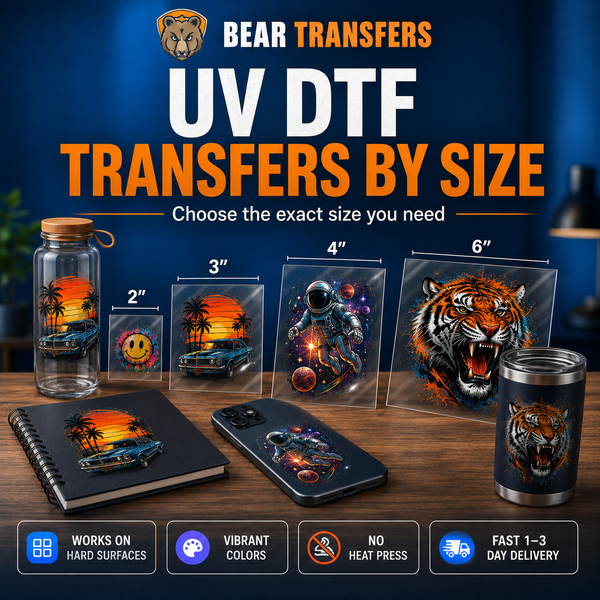
| UV DTF | Cups, tumblers & hard surfaces (no heat) | Not for fabric | UV DTF vs DTF |
Peel type also matters: see cold peel vs hot peel — Bear Transfers prints hot peel film, the fastest workflow.
What Can You Press DTF Transfers On?
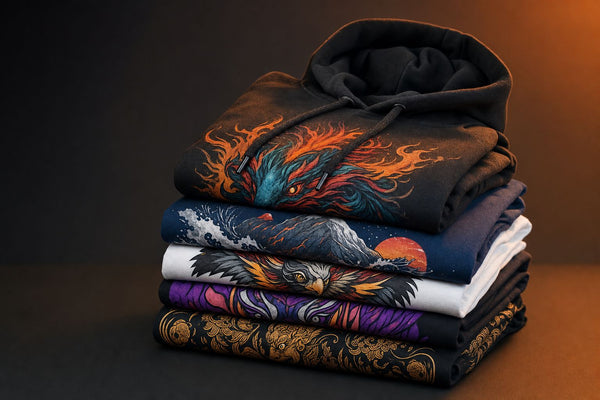
T-shirts, hoodies, hats, sleeves, tote bags, denim, canvas — cotton, polyester and every blend in between. See the best fabrics for DTF and our hats, hoodies & sleeves guide.
How Durable Are DTF Transfers?
Pressed correctly, DTF prints stretch with the fabric and withstand 100+ washes without cracking or fading. Care is simple: wash inside-out in cold water, skip bleach and high-heat drying — details in our wash & care guide.
How Much Do DTF Transfers Cost?
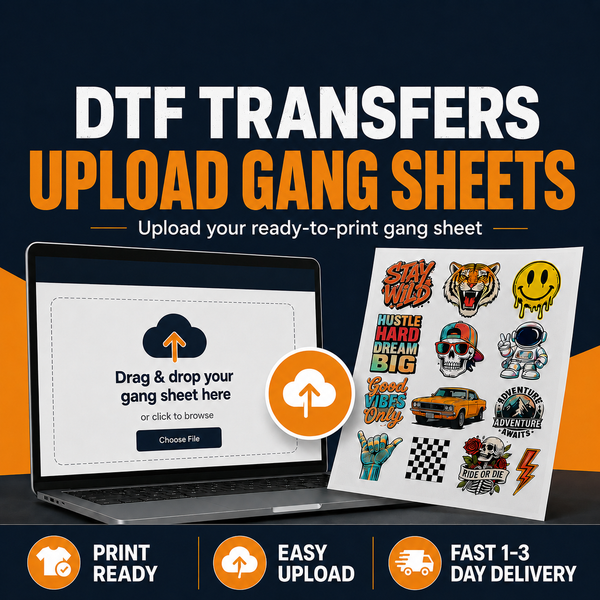
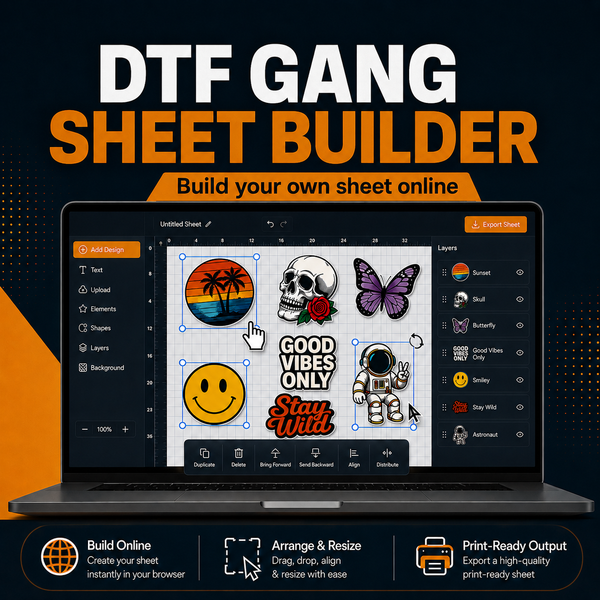
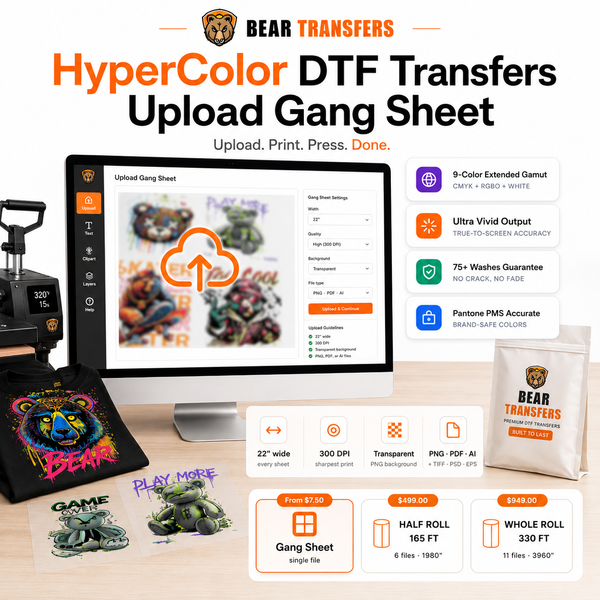
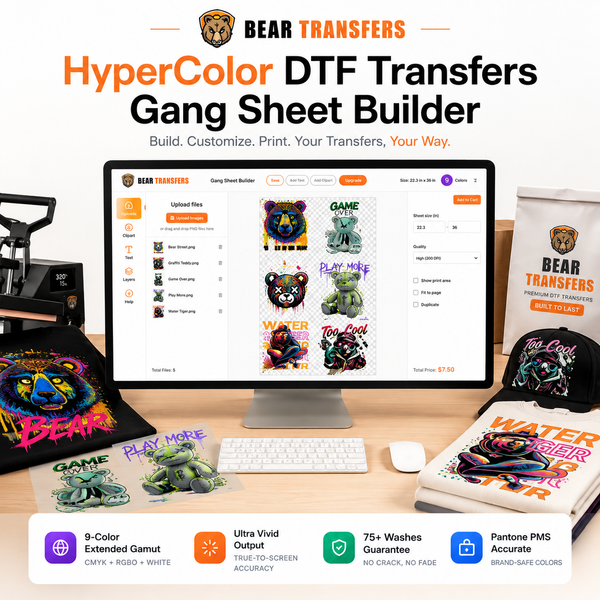
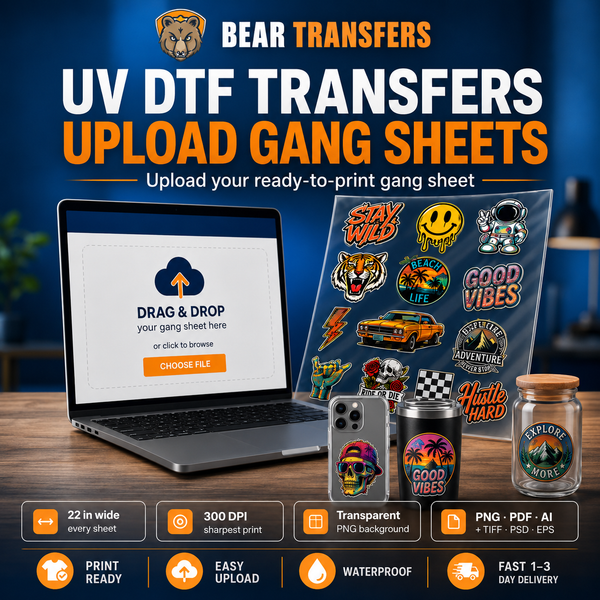
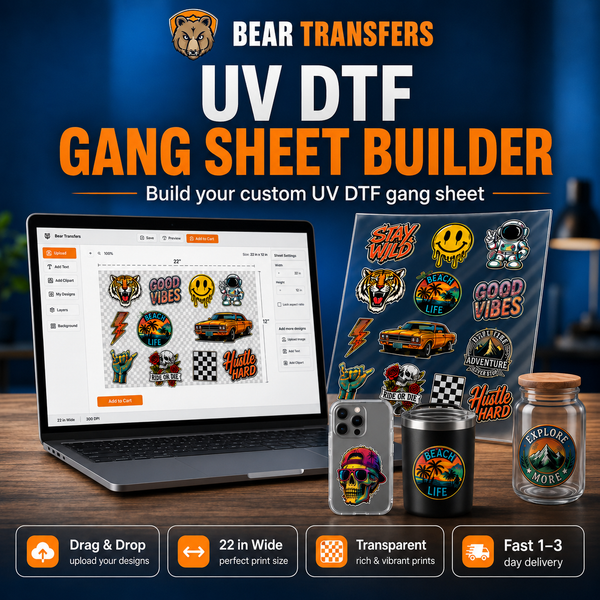
The cheapest way to buy DTF is a gang sheet: many designs nested on one sheet. Bear Transfers gang sheets start at $5 for 1 ft and drop to $2.58/ft at 38 ft — see the full price list, estimate with the calculator, or start in the free gang sheet builder. New to gang sheets? Read what a gang sheet is.
DTF Transfer FAQ
Do DTF transfers feel heavy on the shirt?
Modern DTF has a soft, thin hand feel — noticeably lighter than vinyl and comparable to a quality plastisol print. It stretches with the fabric instead of cracking.
Do I need special equipment?
Only a heat press (a household iron is not consistent enough). Since printing happens on our end, there is no printer, ink or powder to buy.
How long do DTF transfers last before pressing?
Stored flat, cool and dry, unpressed transfers keep for 12+ months — see how to store DTF transfers.
Can I sell shirts made with DTF transfers?
Yes — most print shops and Etsy sellers work exactly this way. Start with how to start a DTF business and selling on Etsy with DTF.
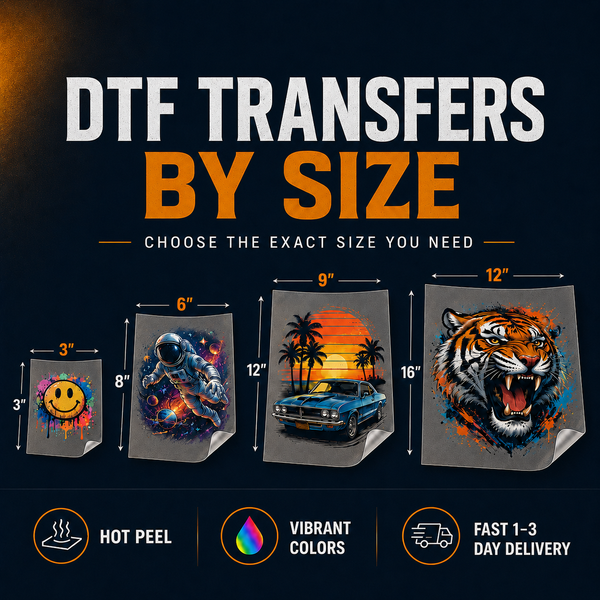
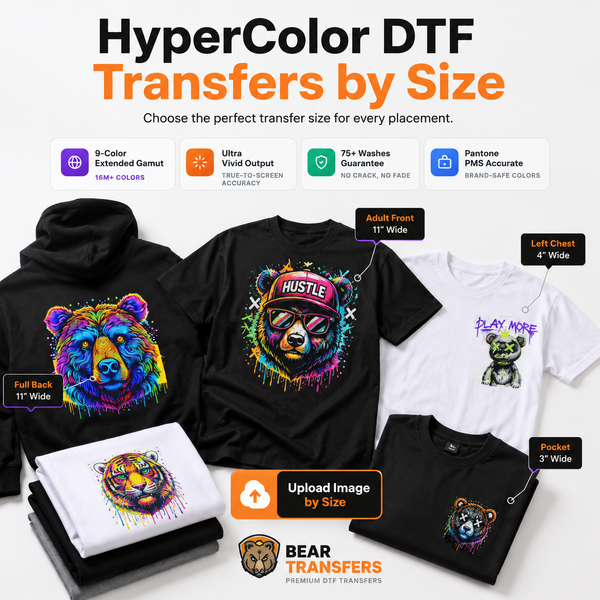
Only need a few prints? Skip the sheet and order DTF transfers by size from from $0.48.