
DTF vs HTV (Heat Transfer Vinyl): Cost, Quality & Speed

If you are choosing between DTF and heat transfer vinyl (HTV), the deciding factor is usually design complexity. Here is the practical breakdown.
DTF vs HTV at a glance
| Factor | DTF | HTV |
|---|---|---|
| Color and detail | Unlimited colors, gradients, photos | Solid colors, cut shapes |
| Weeding | None | Required (tedious for detail) |
| Layering | Built into one transfer | Multiple cuts and presses |
| Fine detail and text | Excellent | Hard to weed |
| Best for | Complex, full–color art | Simple names, numbers, logos |
Why DTF is faster for detail
HTV requires you to cut and then weed away excess vinyl — fine for a single–color name, painful for an intricate logo. DTF prints the entire design, gradients and all, in one shot. No weeding, no layering, no alignment headaches.
When HTV still makes sense
For simple one–color jobs — team numbers, single–line names, basic logos — HTV is cheap, fast, and great for one–offs without a printer. Specialty finishes like glitter and flock are also easy with vinyl.
Go full color with DTF
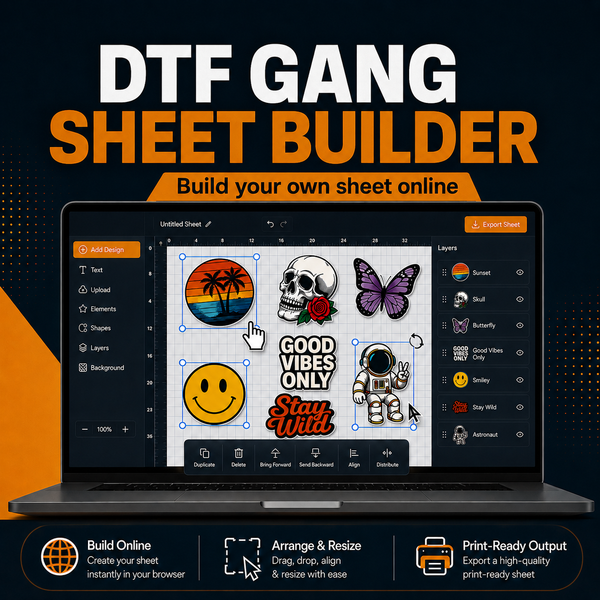
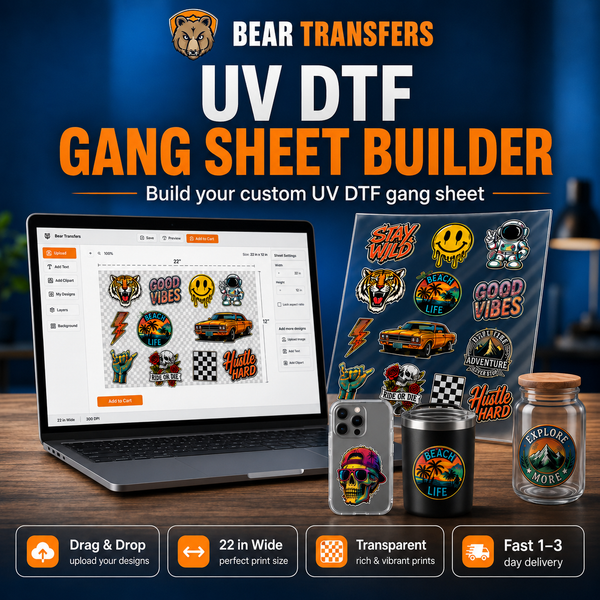
Ready to ditch the weeding? Browse DTF transfers or gang multiple designs in the builder. Pressing tips are in our application guide.
Is DTF better than HTV?
For full–color or detailed designs, yes — no weeding or layering. For simple single–color text, HTV can be cheaper and just as effective.
Does DTF feel like HTV?
DTF has a thinner, more flexible film than thick vinyl, with a soft enough hand for full prints.