
The Best Fabrics & Blanks for DTF Transfers (Cotton, Poly, Blends & More)

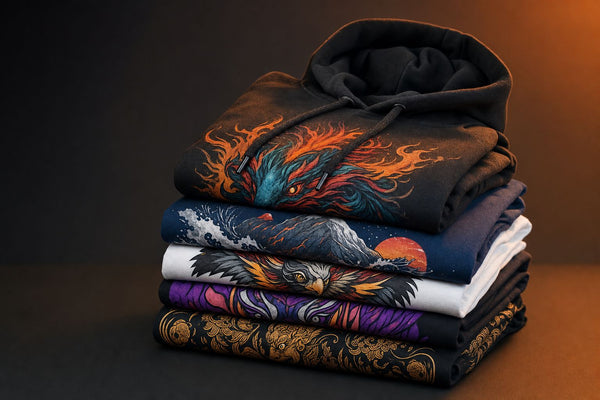
One of DTF’s biggest advantages over sublimation is that it bonds to almost any fabric and any color. That said, some blanks deliver sharper, longer–lasting results than others. Here is how the most common materials perform.
How popular fabrics handle DTF
| Fabric | DTF result | Notes |
|---|---|---|
| 100% Cotton | Excellent | Soft hand, vivid color, easy to press |
| Polyester | Very good | Use lower temp to avoid scorching |
| Cotton/Poly blends | Excellent | The most forgiving all–rounder |
| Tri–blends | Very good | Slightly textured but vibrant |
| Performance / spandex | Good | Lower temp, longer cool; test first |
| Nylon | Good | Needs low temp and care |
| Canvas / denim / fleece | Excellent | Bags, hoodies, hats all work well |
Why DTF beats other methods on blanks
Unlike sublimation, which needs light–colored polyester, DTF prints full color on dark garments, cotton, and blends with a white underbase already built in. That is why it is the go–to for shops printing on mixed inventory. Compare the methods in our DTF vs sublimation breakdown.
What to watch out for
- Polyester dye migration: dark poly can bleed into light prints — press cooler and use a barrier where needed.
- Waterproof or coated fabrics: coatings can block adhesion; always test.
- Heavy texture: ribbed or chunky knits reduce contact — more pressure helps.
Match settings to the fabric
Each material presses a little differently. Our guide to pressing DTF on polyester and nylon covers the tricky ones, and the general heat press settings guide has baseline numbers.
Can DTF go on 100% polyester?
Yes — just lower your temperature to avoid scorching and dye migration, and let it cool before peeling.
Does DTF work on dark fabrics?
Absolutely. DTF prints its own white underbase, so colors stay vivid on black and dark garments.
Shopping for garments? Browse our DTF-ready blank apparel — Gildan heavy cotton tees, Bella+Canvas triblends and Comfort Colors at near-cost pricing, ready to bundle with your transfers.