
Sports Team Fundraising with Custom Tees

Custom tees can turn team pride into meaningful fundraising revenue, but only when the pricing and order structure protect the margin. Set the selling price, minimum quantity, and production plan before opening sales so the team knows exactly what each order contributes.
Start With a Clear Fundraising Target
Begin with the amount the team needs to raise and the deadline for collecting it. A fundraiser for tournament travel may require a different price and sales volume than one covering new uniforms, equipment, or an end-of-season banquet.
Use this basic formula:
Required shirt sales = fundraising target ÷ contribution per shirt
If the goal is $1,000 and each sale contributes $12.50 after direct product costs, the team needs to sell 80 shirts. That target is easier for coaches and families to understand than a general request to “sell as many as possible.”
Decide who receives the margin
There are two common arrangements for a team tee fundraiser:
- Team-managed fundraiser: The team purchases or produces the shirts and keeps the amount remaining after product costs and other expenses.
- Print shop partnership: A printer manages production and gives the team a fixed dollar amount or percentage from each sale.
A fixed contribution per shirt is often easier to communicate. For example, supporters can be told that every tee purchased contributes $10 to the team. If using a percentage, specify whether it is based on the full selling price or the amount left after expenses.
Keep the offer focused. One core design, two garment colors, and a manageable size range reduce ordering errors. More options may attract a few additional buyers, but they also create more artwork combinations, inventory decisions, and opportunities for mistakes.
Calculate the Real Margin on Each Shirt
Do not treat the difference between the blank shirt price and selling price as profit. The transfer, packaging, payment fees, labor, misprints, taxes, and shipping can all affect the amount available for the team.
A practical cost worksheet should include:
- Blank garment cost
- DTF transfer cost
- Pressing and order-packing labor
- Payment processing or storefront fees
- Individual packaging
- Shipping or local delivery
- A small allowance for damaged blanks or pressing errors
Sourcing blank apparel priced near cost helps control the largest variable expense. DTF transfers can also make it practical to decorate cotton, polyester, and common blends without charging by ink color.
Illustrative margin examples
The following examples show how selling price and total unit cost affect fundraising proceeds. These are planning examples, not quoted production prices, and they exclude sales tax.
| Offer | Total Cost per Shirt | Selling Price | Contribution per Shirt | Contribution at 50 Sales |
|---|---|---|---|---|
| Basic team tee | $7.50 | $20.00 | $12.50 | $625 |
| Premium soft tee | $10.00 | $25.00 | $15.00 | $750 |
| Long-sleeve supporter shirt | $13.00 | $30.00 | $17.00 | $850 |
A higher selling price does not automatically create a better fundraiser. A $30 shirt that feels expensive to the audience may sell fewer units than a straightforward $20 tee. Consider the team’s community, garment quality, design, and fundraising purpose when choosing the final price.
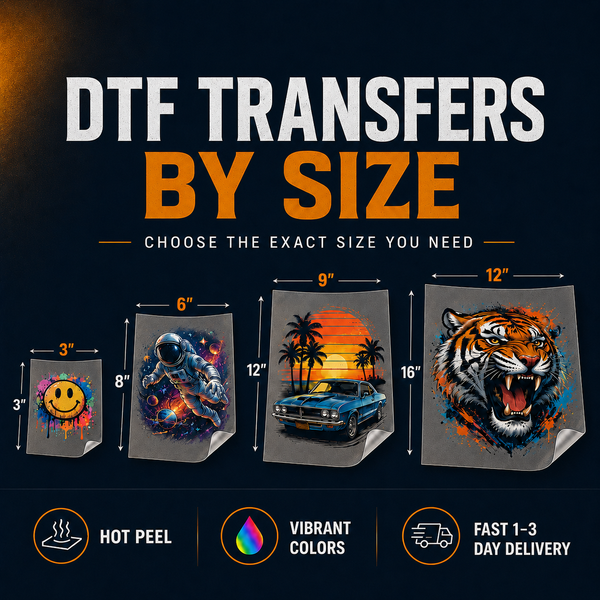
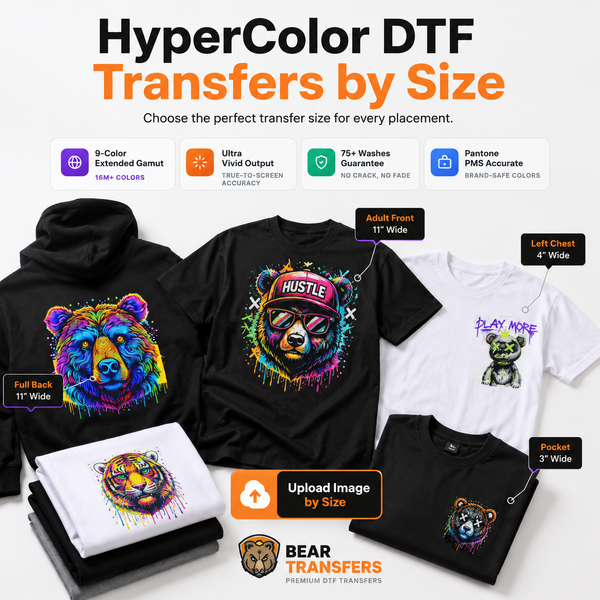
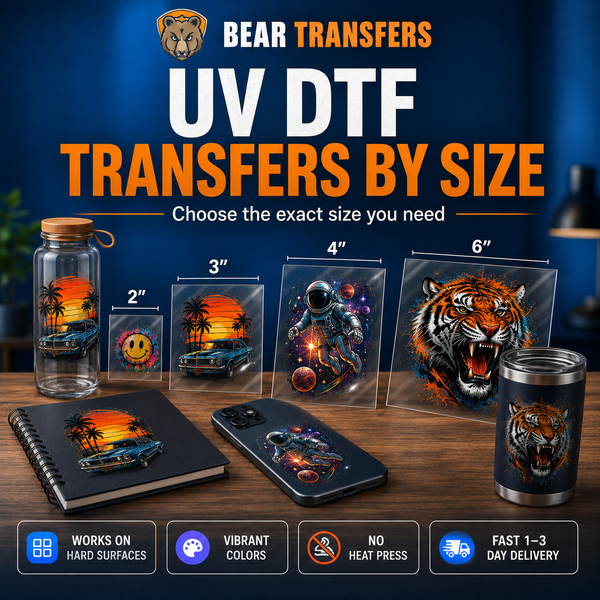
For a simple front or back print, you can order DTF transfers by size. This makes it easy to estimate transfer cost by placement. If the artwork has vivid gradients, bright team graphics, or color-sensitive details, HyperColor 9-color RGB DTF transfers provide another production option.
Set Minimums Without Creating Excess Inventory
The team’s order minimum should be a financial decision, not an arbitrary number. Choose the smallest quantity that covers setup, production, and fulfillment while still generating a worthwhile contribution.
Use a preorder threshold
Preorders are usually the safest structure for a one-time campaign. Open sales for a defined period, collect payment and size information, and produce only after the campaign reaches its threshold.
- Set a clear order deadline.
- Choose a minimum such as 12, 24, or 36 paid shirts based on the campaign economics.
- State what happens if the minimum is not reached.
- Place the production order after sizes and payments are confirmed.
- Sort finished shirts by player, family, or customer name.
If the campaign needs 24 orders to move forward, say so before accepting sales. The team can then encourage families to share the fundraiser without risking a stack of unsold sizes.
Preorders are especially useful when the artwork includes a year, tournament name, roster, or season-specific message. Those designs have limited resale value after the event. For evergreen school mascots or club logos, keeping a few popular sizes may make sense, but compare that approach with the options in Print-on-Demand vs Inventory.
Offer controlled add-ons
Additional products can lift the average order without complicating the main tee. A parent may add a hoodie, while a player may want a name or number. Price each upgrade separately so it does not reduce the promised team contribution.
Team logo decals, bottle labels, and equipment stickers can also be arranged with the UV DTF sticker gang sheet builder. Keep these products optional and avoid letting add-ons delay the primary shirt order.
Build a Fast, Repeatable Production Plan
Once orders close, production speed depends on preparation. Finalize the artwork, confirm the print dimensions, count each garment size, and separate orders before pressing the first shirt.
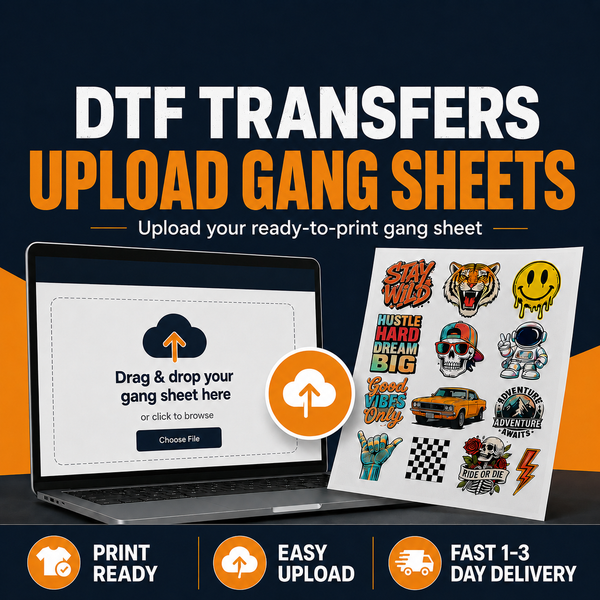
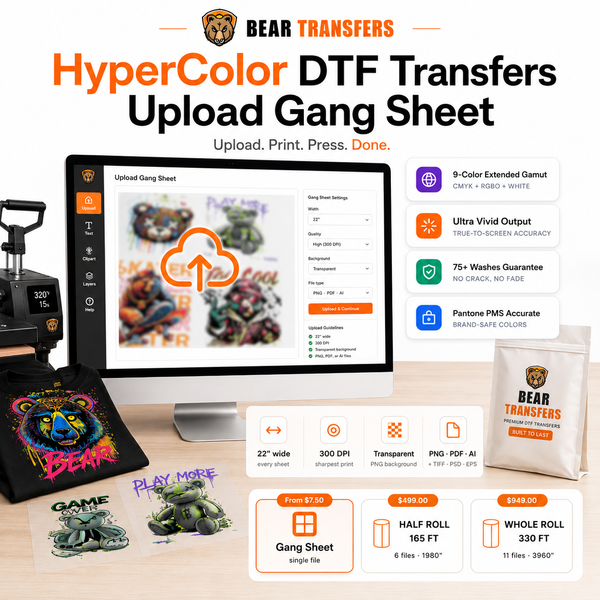
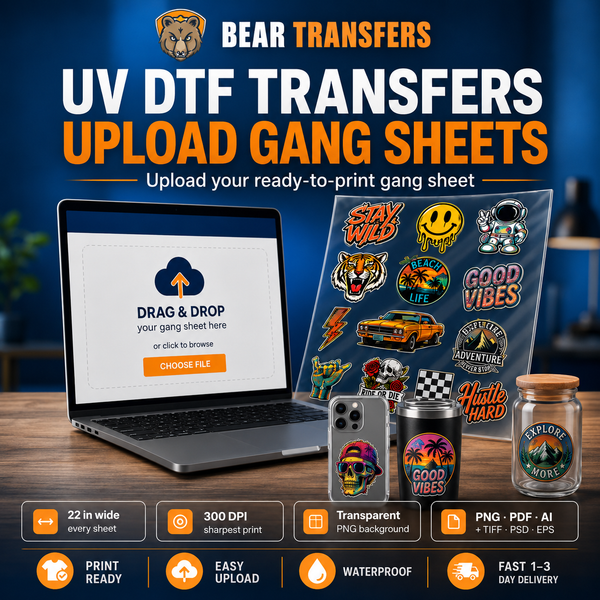
For multiple logos, sleeve marks, player names, or different artwork sizes, a gang sheet can reduce wasted transfer space. If your artwork is already nested at the correct dimensions, you can upload your own ready-made gang sheet. DTF gang sheets start at $2.58 per foot, so careful layout planning can improve unit economics.
Bear Transfers offers same-day production with the applicable cutoff, and most orders ship within 24 hours. UPS shipping generally takes one to three days, and orders over $99 qualify for free shipping. Build transit time and a pressing buffer into the campaign schedule rather than promising delivery immediately after the preorder closes.
Create a pressing checklist
- Match the garment color and size to the order record.
- Confirm the transfer orientation before pressing.
- Position the design consistently with a ruler or alignment tool.
- Follow the current pressing instructions for temperature, pressure, time, and peel.
- Inspect the edges and surface before packing.
- Mark the order complete only after every item is verified.
Bear Transfers uses hot-peel transfers backed by a 100+ wash guarantee when properly applied and cared for. Include basic washing guidance with each order so supporters understand how to protect the print. For larger campaigns, the workflow in How to Press 100 Shirts a Day Without Mistakes can help organize pressing and quality control.
Assign one person to manage the order list and another to verify finished shirts. That second check is especially important for personalized names, numbers, and family orders containing multiple sizes.
FAQ
What is a good minimum for a team shirt fundraiser?
There is no universal minimum. Calculate the quantity needed to cover product costs and reach a meaningful fundraising amount, then use that number as the paid preorder threshold.
How much should a team make from each custom tee?
The contribution depends on the garment, transfer, labor, fees, and selling price. Many organizers start by choosing a clear dollar contribution per shirt and then work backward to set the retail price.
Should team shirts be produced before taking orders?
Preorders are generally safer for dated or event-specific designs because they reduce leftover inventory. Producing a small inventory may work for evergreen mascot merchandise with predictable demand.
How early should the fundraiser close before an event?
Allow time to finalize quantities, receive blanks and transfers, press the garments, correct any issues, and distribute orders. Include production and shipping buffers instead of scheduling around the best-case arrival date.
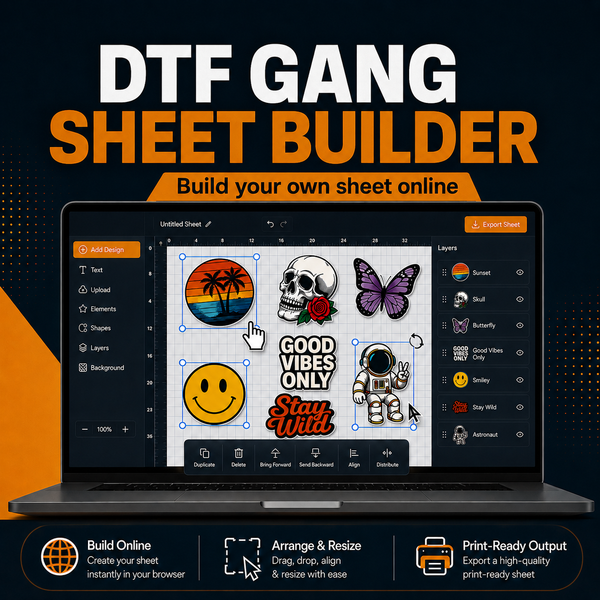
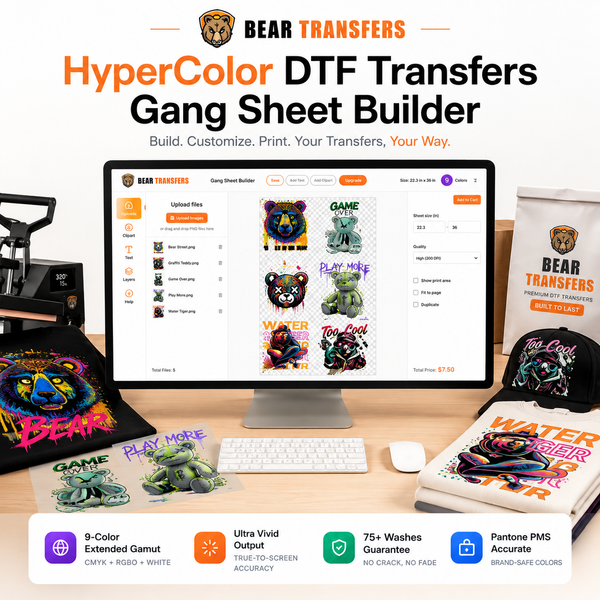
When the order list is final, build a DTF gang sheet online to arrange team graphics efficiently for production.