Print-on-Demand vs Inventory: What Fits?

Print-on-demand protects your cash, while holding inventory gives you more control over cost, quality, and shipping speed. The right model depends less on business size than on what you sell, how predictable demand is, and how much of the production process you can manage consistently.
For many small apparel businesses, the best answer is not choosing one extreme. A hybrid system built around blank garments and ready-to-press DTF transfers can provide on-demand flexibility without giving up control of the customer experience.
How the Two Apparel Fulfillment Models Work
Traditional print-on-demand, or POD, sends each customer order to a third-party provider. That provider prints the garment and ships it directly to the customer. You usually do not purchase the blank, handle production, inspect the finished item, or pack the order yourself.
Holding inventory typically means purchasing and printing finished garments before customers order them. When a sale arrives, you pull the correct size and design from stock, pack it, and ship it.
There is also a practical middle ground: stock versatile blank apparel and transfers, then press each garment after it sells. This is still an on-demand workflow, but you control production instead of outsourcing the complete order.
| Factor | Third-Party POD | Finished Inventory | Blanks + DTF Hybrid |
|---|---|---|---|
| Upfront investment | Low | Highest | Moderate |
| Per-unit control | Limited | High | High |
| Unsold stock risk | Minimal | High | Lower than finished stock |
| Fulfillment speed | Provider-dependent | Fast if stocked | Fast with an organized press station |
| SKU flexibility | High | Low once printed | High |
| Quality inspection | Usually after delivery | Before shipping | Before shipping |
The difference becomes important as your catalog grows. Three garment colors, six sizes, and two designs create 36 finished SKUs. Stocking four of each requires 144 printed garments. With a hybrid model, the same blank can support multiple designs, and unused transfers take up far less room than finished shirts.
Compare the Real Cost, Not Just the Print Price
POD looks inexpensive because there is little initial spending. However, the per-order charge usually includes the provider's garment, printing, handling, and fulfillment costs. Those charges can leave less room for paid advertising, discounts, wholesale pricing, or customer-service remakes.
Inventory has the opposite cost pattern. You pay earlier for blanks, decoration, storage, and labor, but established products may deliver a better per-unit cost. That advantage disappears if the garments do not sell.
Calculate both models using the same order assumptions. Your POD cost should include:
- The printed garment
- Provider fulfillment charges
- Shipping you subsidize
- Store and payment fees
- A reasonable allowance for replacements or refunds
For self-fulfillment, include:
- The blank garment and inbound freight
- The transfer or other decoration
- Pressing, inspection, folding, and packing labor
- Packaging materials
- Equipment and workspace costs
- Misprints, damaged blanks, and remakes
Do not treat your own labor as free. If pressing, packing, and customer service require 15 minutes, assign a labor value to that time. Otherwise, a product can appear profitable while consuming hours you cannot use for selling or design work.
A useful break-even formula is: monthly fixed self-fulfillment costs divided by the difference between POD variable cost and your in-house variable cost. The result estimates how many units you must sell before self-fulfillment becomes financially favorable, assuming the in-house variable cost is lower.
When Each Model Fits Your Apparel Business
Choose third-party POD for unproven demand
POD is useful when you are testing a new niche, launching many designs, or operating without production space. It lets actual orders identify winners before you commit cash to finished garments.
It may also fit products that sell infrequently but still deserve a place in your catalog. The tradeoff is reduced control over print consistency, packaging, production timing, and the exact garment your customer receives.
Hold finished inventory for predictable bestsellers
Finished stock fits evergreen products with reliable size and color demand. It also works well for events, local pickup, retail shelves, and deadlines where garments must be ready immediately.
Use sales records rather than instinct when selecting quantities. A design can be popular overall while certain size and color combinations move slowly. Track every variant separately, set maximum stock levels, and discount aging inventory before it absorbs more cash and shelf space.
Use a hybrid model when designs change faster than garments
A blanks-and-transfers system is often practical for small shops that want control without preprinting every SKU. Stock a limited range of proven garment styles and neutral colors, then decorate them as orders arrive.
You can purchase blank apparel priced near cost and organize it by style, color, and size. Keep transfers filed by design and order number. When a sale comes in, pull the blank, press the transfer, inspect the result, and ship it.
This approach is especially useful for learning how to run a lean apparel label. The guide to building a clothing brand on a budget with DTF covers additional ways to avoid tying up capital too early.
Build a Low-Risk Hybrid Inventory System
Start by separating your catalog into three groups: proven products, active tests, and occasional items. Preprint only proven products when immediate fulfillment matters. Produce active tests from blanks and transfers. Leave occasional items with a POD provider unless bringing them in-house offers a clear service or margin benefit.
- Standardize your blanks. Limit the number of garment brands and styles you carry. A focused blank selection makes sizing, photography, care instructions, and reordering easier.
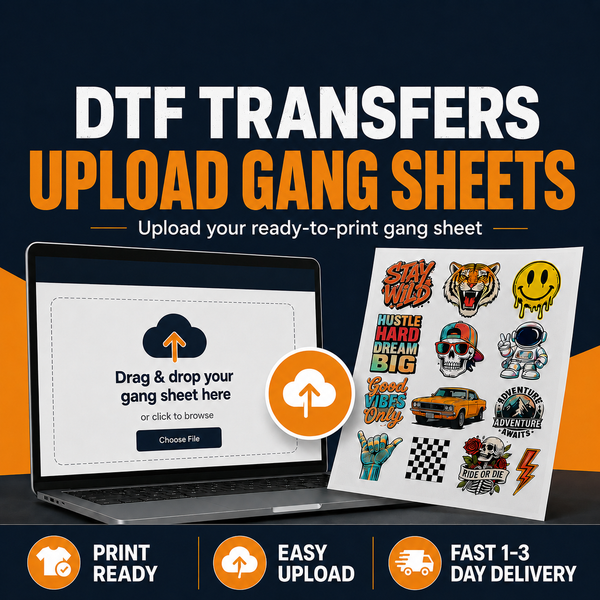
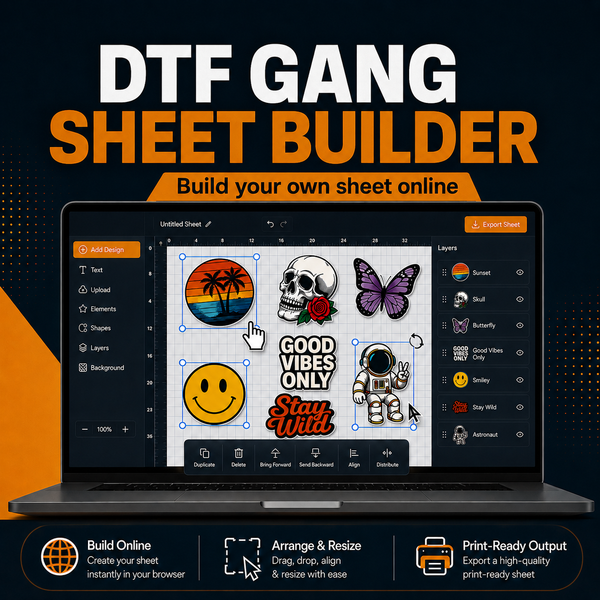
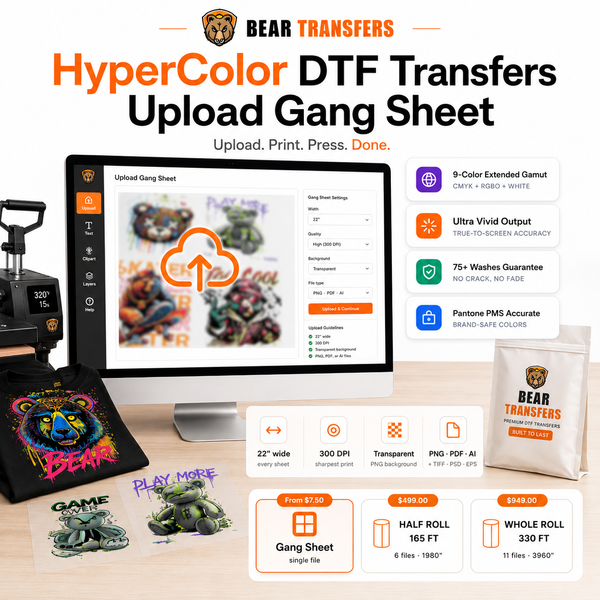
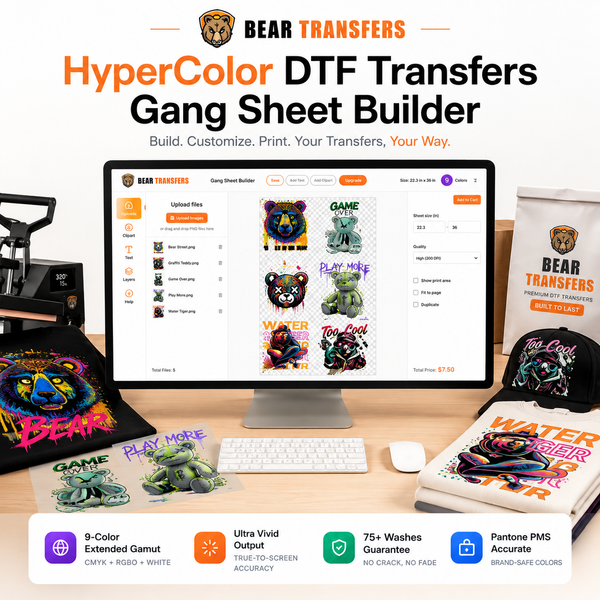
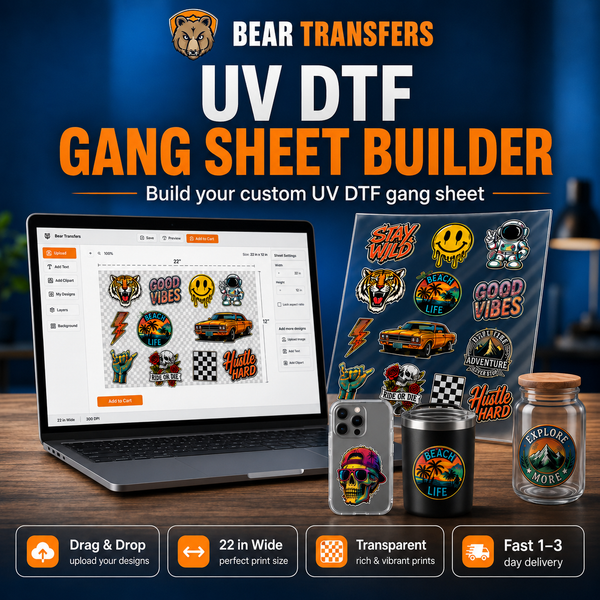
- Order transfers around actual demand. Use the DTF gang sheet builder to combine multiple logos, front prints, sleeve graphics, and reorder quantities on one sheet. Gang sheets start from $2.58 per foot, helping reduce waste when artwork is arranged efficiently.
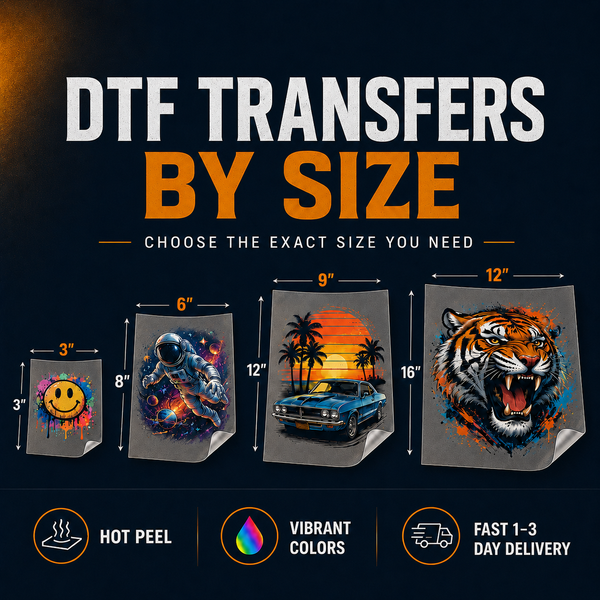
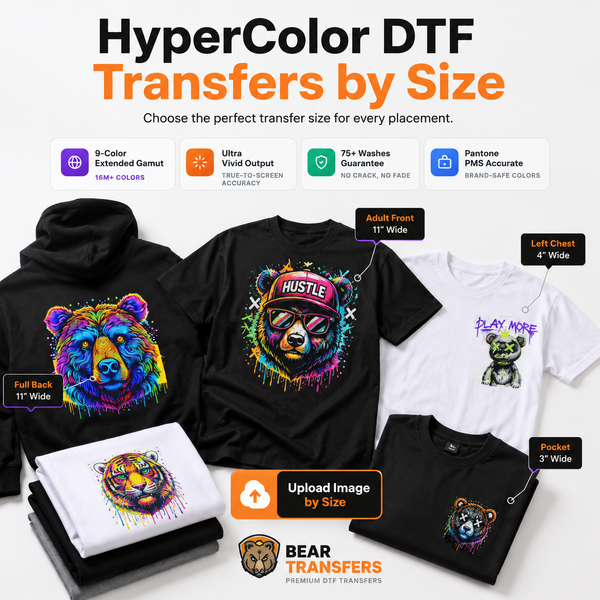
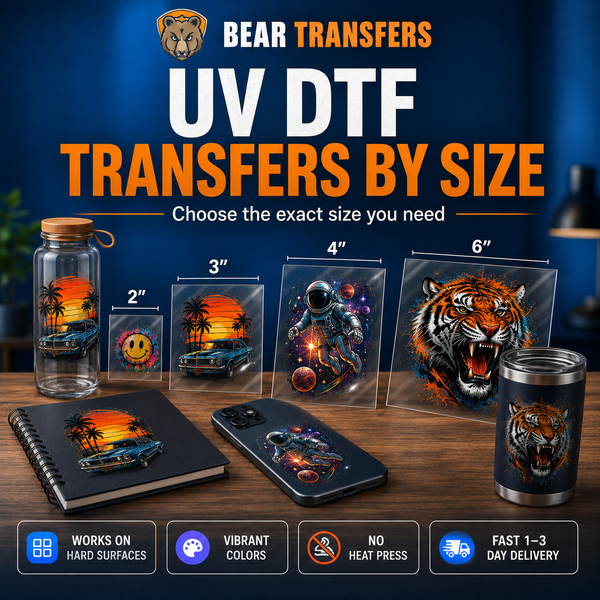
- Use simple ordering for small tests. If you do not want to arrange a sheet, order DTF transfers by size for specific placements and quantities.
- Set reorder points. Multiply average daily sales by supplier lead time, then add safety stock based on deadline risk. Review the number whenever sales patterns change.
- Batch work without delaying orders. Group pulling, pressing, inspection, and packing into scheduled blocks. A documented workflow helps you increase output without skipping temperature, pressure, placement, or final inspection checks.
Bear Transfers produces hot-peel transfers backed by a 100+ wash guarantee. Same-day production is available before the cutoff, most orders ship within 24 hours, and UPS delivery is generally 1-3 days. Qualifying orders over $99 ship free. Those timelines can support lean transfer inventory, but you should still keep extra units for bestsellers, event deadlines, and possible remakes.
Products with demanding artwork may need a different production choice. HyperColor 9-color RGB DTF transfers are available for designs where expanded color capability matters. You can also add non-apparel products without stocking printed shirts by using the UV DTF sticker gang sheet builder for hard-surface decals.
Before scaling volume, document an inspection standard for blanks, transfers, placement, pressing, and packing. The quality control checklist for every DTF order provides a practical framework for catching problems before customers do.
FAQ
Is print-on-demand better for a new apparel business?
It is often useful for initial testing because it minimizes unsold inventory. However, compare the full delivered cost and order a sample before relying on any POD product for customer orders.
How much finished inventory should I hold?
Base quantities on variant-level sales, supplier lead time, and upcoming deadlines. Start with proven sizes and colors instead of buying equal quantities of every SKU.
Can I fulfill orders on demand with a heat press?
Yes. Stocking blanks and ready-to-press DTF transfers lets you produce after the sale while inspecting each garment before shipment. You will need a reliable press, organized storage, and documented settings.
When should I switch from POD to inventory?
Consider switching a product when demand becomes predictable, self-fulfillment improves your margin or delivery time, and you have enough labor and space to maintain quality without slowing other work.
Start testing a flexible in-house workflow when you build a DTF gang sheet online for your next group of apparel designs.