Building a Clothing Brand on a Budget with DTF

Starting a clothing brand does not require a warehouse full of inventory or an expensive screen-printing setup. With DTF transfers, a heat press, and a focused product line, you can validate designs, produce short runs, and grow without tying up your budget in unsold apparel.
The goal is not to look small; it is to keep your operation flexible while putting money into the products and marketing that generate sales.
Why DTF Makes a Lean Clothing Brand Possible
Traditional apparel production often rewards large orders, but large orders create risk for a new brand. Every combination of design, color, garment, and size becomes another item you must buy and store before knowing whether customers want it.
DTF transfers separate the printed design from the garment. You can stock a controlled selection of blanks and apply transfers as orders arrive. The same transfer can often be used on cotton, polyester, and common blends, allowing one design inventory to support several garment options.
This production model offers practical advantages for a budget-conscious launch:
- Smaller test runs: Print multiple designs without committing to finished shirts in every size.
- Full-color artwork: Produce detailed graphics, gradients, and small color runs without separating every ink color.
- Faster restocking: Reorder successful transfer designs while discontinuing weak sellers.
- Flexible placement: Use the same production method for full fronts, left chests, sleeves, neck labels, and other placements.
- Simple equipment needs: A reliable heat press and organized work area can support an in-house operation.
If you have not used DTF before, a DTF + UV DTF sample pack lets you inspect print detail, feel, and application before building a larger product release.
Build a Budget Around a Focused First Collection
A common startup mistake is trying to launch too many products at once. Each additional shirt color, garment style, and design creates more photography, inventory, product pages, quality checks, and fulfillment decisions.
Start with a small collection built around a recognizable customer and visual direction. For example, choose three strong graphics, two garment colors, and one dependable shirt style. You can introduce hoodies, specialty fabrics, and more colorways after sales reveal what customers actually prefer.
Divide your available money into clear categories before ordering anything:
| Budget category | Lean starting choice | Cost-control rule |
|---|---|---|
| Artwork | A few versatile, print-ready designs | Confirm ownership and usage rights before printing |
| Transfers | Mixed-design gang sheets or small quantities by size | Test artwork before ordering a deep supply |
| Blank apparel | One core style in limited colors | Restock proven sizes instead of guessing broadly |
| Equipment | A dependable heat press and basic alignment tools | Prioritize consistent pressure and temperature |
| Packaging | Simple mailers, labels, and care cards | Upgrade presentation after margins support it |
| Marketing | Product samples and reusable photo or video content | Show the garment clearly before buying extra ads |
Blank quality still matters because customers judge the complete garment, not just the print. Bear Transfers offers blank apparel priced near cost, helping you source garments and transfers without adding another complicated purchasing process.
Calculate the cost of each finished item before setting a retail price. Include the blank, transfer, packaging, payment fees, labor, damaged-item allowance, and any shipping expense your business absorbs. A shirt is not profitable merely because its selling price exceeds the cost of the blank.
Use Gang Sheets to Lower Transfer Costs
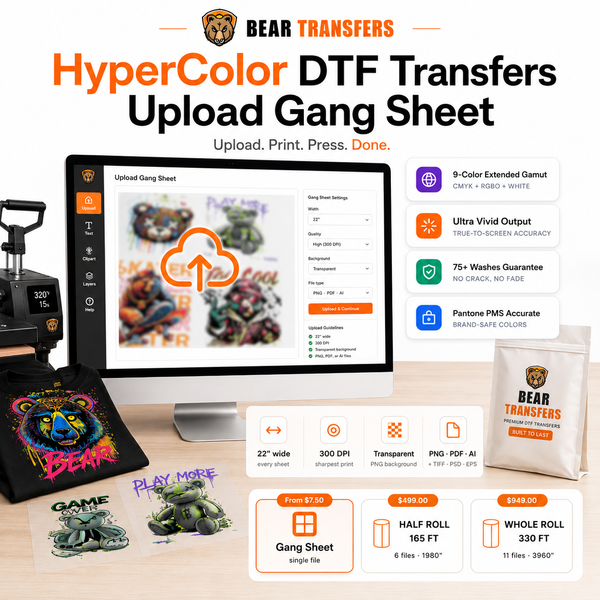
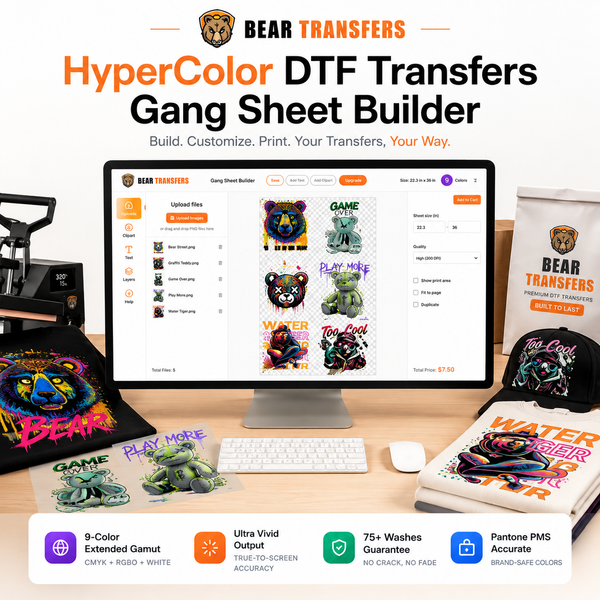
A gang sheet places multiple graphics on one continuous sheet. Instead of ordering every logo, neck label, and front design separately, you arrange them together and cut them apart after delivery. DTF gang sheets from Bear Transfers start at $2.58 per foot, making efficient layout an important budget tool.
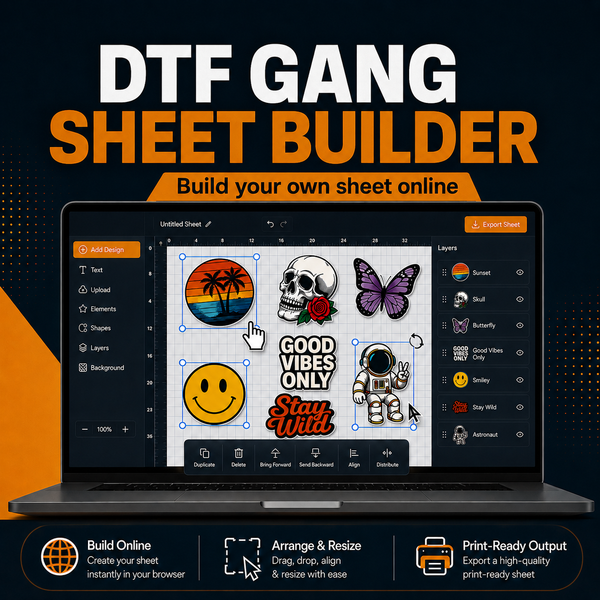
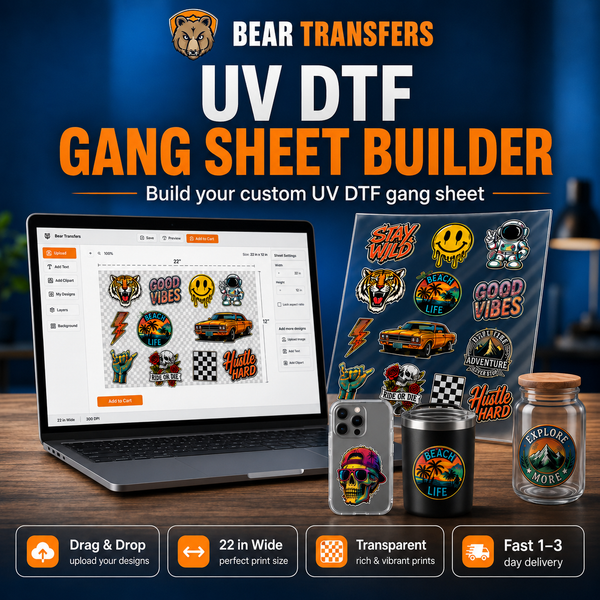
You can build a DTF gang sheet online when you want to arrange artwork in the browser. Fill unused spaces with small brand marks, care labels, sleeve graphics, or extra copies of a likely bestseller. Leave enough room around each image for comfortable cutting.
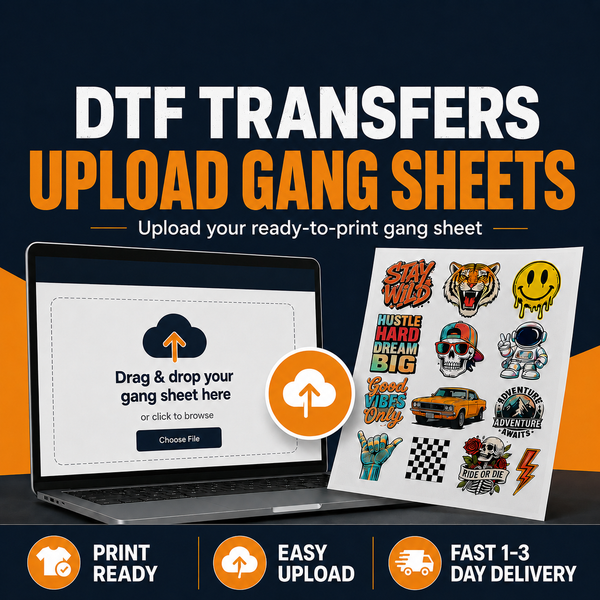
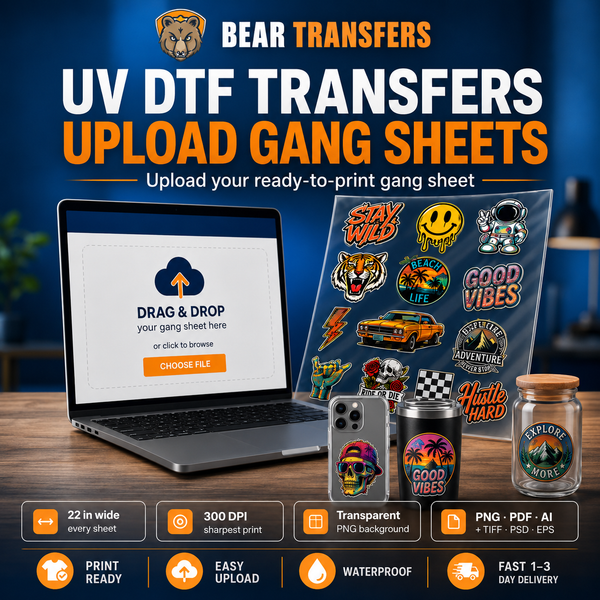
If you already design gang sheets in professional graphics software, you can upload your own ready-made gang sheet. Check the required file dimensions, resolution, transparency, and color settings before submitting it. Artwork should be sized at its intended print dimensions rather than enlarged after upload.
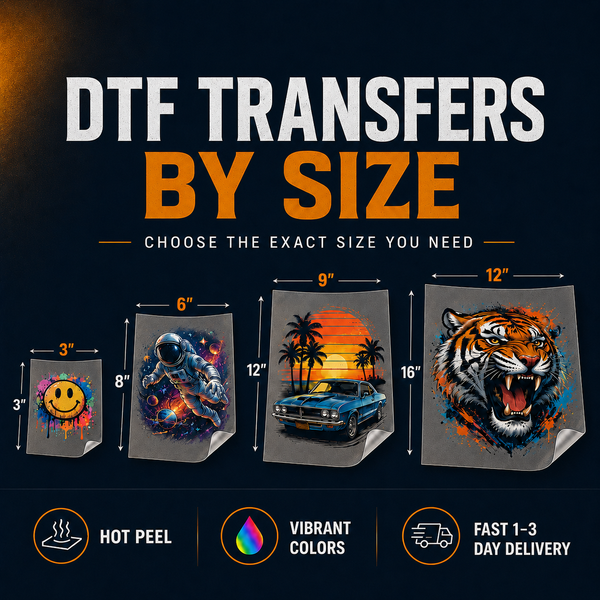
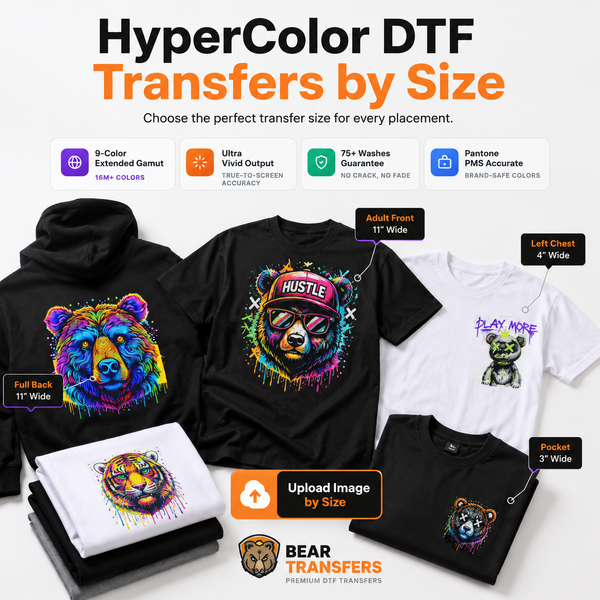
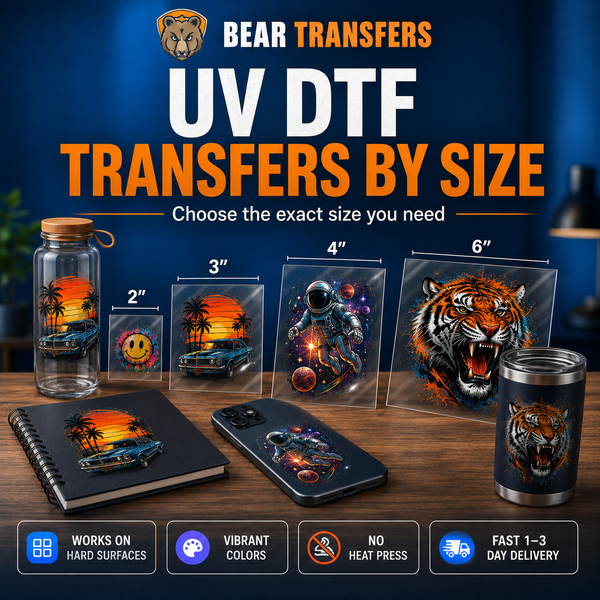
For early samples or designs that do not fill a complete sheet efficiently, it may be easier to order DTF transfers by size. This option helps you test one placement or replace a specific design without rebuilding an entire layout.
Plan quantities from products, not guesses
Work backward from the garments you intend to sell. If a shirt needs a full-front graphic, inside neck label, and sleeve mark, include all three components in your transfer count. Keep a few extras for press testing, photography samples, or replacement orders, but avoid printing months of unproven artwork.
Before a large run, press one complete sample on the exact blank you plan to sell. Check the artwork size, placement, color, edge quality, stretch response, and feel after cooling. For logos with strict brand colors, review the practical limits explained in the guide to color matching brand logos in DTF.
Create a Repeatable Production Workflow
Budget production still needs professional consistency. A misaligned design or incomplete press wastes a blank, a transfer, and labor. Written steps reduce those losses and make it easier to train someone when order volume grows.
- Inspect the blank. Check the garment for marks, holes, incorrect sizing, and seam problems before decorating it.
- Prepare the press. Use the current application instructions for temperature, time, pressure, and peeling.
- Pre-press when directed. Flatten the print area and address moisture or wrinkles according to the application process.
- Align the transfer. Use a ruler, guide, or template rather than relying entirely on sight.
- Press and peel correctly. Bear Transfers provides hot-peel transfers, helping keep the workflow moving without waiting for every garment to cool.
- Complete the finishing press. Follow the specified finishing process and inspect the entire graphic.
- Record the result. Note the blank style and successful settings for future runs.
Bear Transfers hot-peel transfers include a 100+ wash guarantee. Correct application and clear customer care directions remain essential, so include a care card with every order. The DTF washing instructions card guide explains what to communicate after the sale.
Production speed also affects how much inventory you need to hold. Bear Transfers has a same-day production cutoff, most orders ship within 24 hours, and UPS delivery generally takes 1–3 days. Free shipping is available on orders over $99. Plan replenishment around your location, order schedule, weekends, and launch date rather than promising customers a timeline before supplies arrive.
Launch Small, Measure Demand, and Reinvest
Your first collection should generate information as well as revenue. Track sales by design, size, garment color, and traffic source. A design that receives attention but few purchases may need a better product photo, different blank, revised price, or clearer audience.
Use preorders carefully if cash is extremely limited. State the production timeline clearly, set a firm ordering window, and purchase supplies immediately after the window closes. For products kept in stock, establish a reorder point based on actual sales and transfer turnaround rather than intuition.
Reinvest in the parts of the brand that remove constraints. That might mean deeper stock in proven sizes, a better heat press, improved photography, additional transfer designs, or packaging that strengthens the customer experience. Avoid spending early profits on broad product expansion before the core collection sells consistently.
Recurring supply purchases can also create incremental savings through the Bear Cash rewards program. Treat rewards as a reduction in future operating costs, not a reason to order inventory you do not need.
FAQ
How much inventory should a new clothing brand buy?
Start with enough blanks and transfers to create samples and fulfill a realistic first sales period. Keep the selection narrow, monitor size demand, and reorder proven products instead of buying every possible variation.
Do I need a heat press for DTF transfers?
A proper heat press is the dependable choice for controlling time, temperature, and pressure. Household irons do not provide the same consistency across the complete design area.
Should I order transfers by size or use a gang sheet?
Ordering by size is convenient for isolated designs and early tests. Gang sheets are generally better when you can combine multiple graphics, labels, and quantities into an efficient layout.
Can I run a clothing brand from home with DTF?
Yes, if you have a suitable heat press, safe electrical setup, organized transfer storage, blank inventory space, and a clean area for pressing and packing orders. Confirm any local business or home-use requirements that apply to your location.
When your artwork is ready, build a DTF gang sheet online and turn a focused collection into press-ready inventory.