




DTF Washing Instructions Card: Customer Care Guide

A great DTF print can still be damaged by an aggressive wash cycle, high dryer heat, or an iron placed directly on the design. A clear DTF washing instructions card gives customers simple directions that protect their garment while reducing avoidable complaints for your apparel business.
The best care card is short enough to read, specific enough to follow, and consistent with both the garment label and your transfer supplier’s recommendations.
Why Every DTF Order Needs a Washing Instructions Card
Customers do not automatically know how to care for decorated apparel. Many wash every garment the same way, using warm water, strong stain treatments, fabric softener, and a high-heat dryer cycle. Those habits may be convenient, but they can place unnecessary stress on a printed design.
A DTF washing instructions card sets expectations at delivery. It tells the customer that the decoration needs reasonable care and gives them a quick reference they can keep near the washer.
Care cards also help separate a production issue from a care issue. If you document your pressing process, inspect every finished garment, and include written washing directions, you have a much clearer record when a customer reports a problem. Use a repeatable inspection process such as this DTF order quality control checklist before anything is packed.
Bear Transfers hot-peel transfers include a 100+ wash guarantee, but long-term results still depend on correct application and appropriate garment care. Washing instructions do not compensate for incorrect pressure, an uneven platen, insufficient curing, or a skipped finishing press.
What to Put on a DTF Care Card
Your card should lead with the actions that matter most. Avoid long explanations, technical printing terms, or vague directions such as “wash carefully.” Customers need direct instructions they can follow without contacting you.
Ready-to-use DTF washing instructions
The following wording works as a practical starting point for most DTF-decorated apparel:
- Wait at least 24 hours before the first wash.
- Turn the garment inside out before washing.
- Machine wash cold with similar colors.
- Use a mild detergent and a normal or gentle cycle.
- Do not use bleach or fabric softener.
- Remove promptly after washing.
- Hang dry when possible or tumble dry on low heat.
- Do not iron directly over the printed design.
- Do not dry clean unless specifically approved.
If your transfer, garment, or ink system requires different care, revise the card accordingly. When the blank garment’s sewn-in label is more restrictive, tell the customer to follow the stricter instruction.
Short version for small cards
If you use a business-card-size insert, condense the message without removing the essential directions:
DTF Garment Care: Wait 24 hours before washing. Wash inside out in cold water with mild detergent. Do not use bleach or fabric softener. Hang dry or tumble dry low. Never iron directly on the design.
A larger card can include your logo, order contact information, and a short note explaining that proper care helps preserve the print. Keep the care instructions visually separate from promotions so they are not overlooked.
Why Each DTF Washing Instruction Matters
Customers are more likely to follow directions when your staff can briefly explain the reason behind them. Use this table as an internal reference when answering care questions.
| Instruction | What it helps prevent |
|---|---|
| Wait before the first wash | Gives the freshly applied decoration time to settle before exposure to water, detergent, and mechanical action. |
| Turn the garment inside out | Reduces direct rubbing between the printed surface, washer drum, and other garments. |
| Wash in cold water | Limits unnecessary heat exposure and is suitable for routine cleaning of many decorated garments. |
| Use mild detergent | Avoids harsh additives and aggressive stain treatments on the print. |
| Skip bleach and softener | Reduces chemical exposure that may affect the garment or decoration. |
| Dry on low heat | Prevents repeated high dryer temperatures from stressing the print and fabric. |
| Do not iron the design | Keeps a hot iron from contacting and damaging the printed surface. |
Turning the garment inside out is useful during both washing and machine drying. Customers should also zip zippers, close hook-and-loop fasteners, and avoid washing the item with rough hardware that can scrape the print.
For leggings, performance shirts, and other elastic garments, the wash instructions stay similar, but correct production is especially important. Review how to prevent cracking when applying DTF transfers to stretch fabrics, and test the exact garment before accepting a large order.
Build Care Cards Into Your Production Workflow
Do not treat care cards as an optional item added only when someone remembers. Make them part of the order workflow, just like counting garments, confirming sizes, pressing transfers, and checking placement.
- Create one approved master card. Keep the language consistent across your website, invoices, packaging, and customer emails.
- Print cards in batches. Store them at the folding or packing station so staff can add one to every order.
- Match the card to the product. Use a separate version if a specialty garment has stricter care requirements.
- Record pressing details. Note time, temperature, pressure, finishing press, garment style, and transfer batch in your production records.
- Give care instructions before delivery. Include them in the package and in the pickup or shipping message.
For individually packed team, event, or company orders, place one card in each bag. For a bulk order going to one coordinator, include several cards plus a digital version they can forward to every wearer.
Your blank selection matters too. A transfer may be durable, but the finished product must be cared for according to the fabric, dye, construction, and manufacturer’s label. You can pair transfers with blank apparel priced near cost, then test the exact garment and color before committing to a production run.
Test before writing absolute care claims
Wash testing gives you direct information about your complete process: artwork, transfer, press settings, blank garment, finishing press, and laundering method. Apply a sample exactly as you would for a customer, wait before washing, and inspect it after repeated wash-and-dry cycles.
If you are evaluating DTF for the first time, a DTF and UV DTF sample pack lets you inspect and test the products before planning customer work. Remember that UV DTF stickers are made for compatible hard surfaces, not garments, so they should not receive the same washing instructions card.
Common Care Card Mistakes to Avoid
One common mistake is making promises without stating care requirements. “Washable” does not mean the customer can repeatedly use maximum heat, bleach, or direct ironing without risk. Keep your sales language confident, but pair durability claims with clear directions.
Another mistake is blaming every failure on washing. If a print lifts at an edge after the first wash, inspect your pressure, platen contact, curing, and finishing process before assuming the customer caused it. A care card supports good production; it does not replace it.
Avoid mixing garment and hard-surface instructions. DTF apparel transfers and UV DTF stickers have different applications and care needs. Label inserts clearly so customers do not assume a tumbler sticker and a printed shirt should be handled the same way.
Finally, update your card when your materials or process changes. If you switch blanks, pressing equipment, transfer types, or packaging procedures, run a new test and confirm that the wording remains accurate. When you need production-ready artwork printed without using a builder, you can upload your own ready-made gang sheet and keep the resulting application details with your shop records.
FAQ
How long should customers wait before washing a DTF shirt?
Tell customers to wait at least 24 hours after pressing before the first wash unless your specific transfer instructions require a longer period.
Can DTF garments go in the dryer?
Yes, low heat is the safer recommendation for most DTF-decorated apparel. Hang drying reduces heat exposure further and should be suggested when practical.
Can customers iron a DTF print?
They should never place a hot iron directly on the design. If the garment needs ironing, turn it inside out, avoid the printed area, and follow the garment label.
Should every item receive its own care card?
Individually sold or packed garments should receive their own card. For bulk orders, provide enough printed cards for distribution and send a digital copy to the order coordinator.
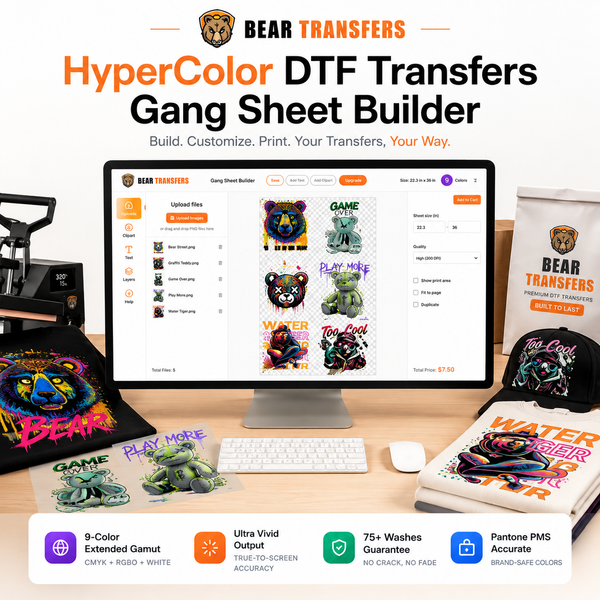
When you are ready to organize artwork for your next apparel order, build a DTF gang sheet online and add your approved care card to the packing workflow.