
School Spiritwear with DTF: PTA & Booster Guide

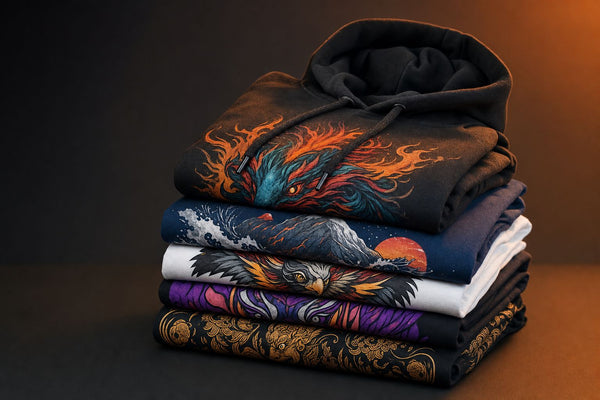
School spiritwear can raise money, build community, and give families something they will actually use. With DTF transfers, PTAs and booster clubs can produce colorful apparel in practical quantities without committing to a large run of every design and size.
The key is to simplify choices, approve artwork early, and organize production before orders begin. Here is a practical process for turning school logos, mascots, team graphics, and event themes into a manageable spiritwear program.
Why DTF Works for School Spiritwear
Direct-to-film transfers are printed in full color and heat-applied to compatible garments. One transfer can include detailed mascots, small lettering, gradients, and multiple colors without pricing each ink color separately.
That flexibility is useful for schools because spiritwear orders rarely follow a neat pattern. One family may want a youth T-shirt, another may order a 2XL hoodie, and a coach may need a performance shirt. DTF lets you decorate different garment styles as orders arrive instead of guessing which finished products will sell.
DTF also makes it easier to offer short-run designs for:
- Elementary, middle, and high school spirit days
- Athletic teams, marching bands, and performing arts groups
- Senior classes, field days, tournaments, and school trips
- Teacher appreciation, staff apparel, and volunteer shirts
- Limited seasonal drops and championship merchandise
Bear Transfers offers hot-peel transfers backed by a 100+ wash guarantee. DTF gang sheets start at $2.58 per foot, which helps organizations combine artwork and control decoration costs. Orders placed before the current same-day production cutoff can enter production that day, followed by estimated 1–3 business day UPS shipping.
Before launching a full sale, test the transfer, garment, heat press, and pressing settings together. The DTF + UV DTF sample pack gives committees a practical way to evaluate color, feel, pressing, and sticker options before approving a program.
Plan a Spiritwear Collection Families Can Shop Easily
A large catalog may look impressive, but too many options create order errors and slow down volunteers. Start with a focused collection: two or three garment types, a limited color palette, and a few designs with clearly defined placements.
Choose dependable core products
A simple opening assortment might include a short-sleeve T-shirt, a crewneck sweatshirt, and a hoodie. Add performance wear, jackets, or specialty items only when the audience has a clear need. You can source blank apparel priced near cost to keep garments and transfers in the same purchasing workflow.
Check each garment’s fabric content, available sizes, color inventory, and care instructions. DTF works on many common apparel fabrics, but every blank should be tested before production. Textured surfaces, seams, zippers, coatings, and heat-sensitive materials may require different pressure, temperature, or positioning.
Standardize placements and sizes
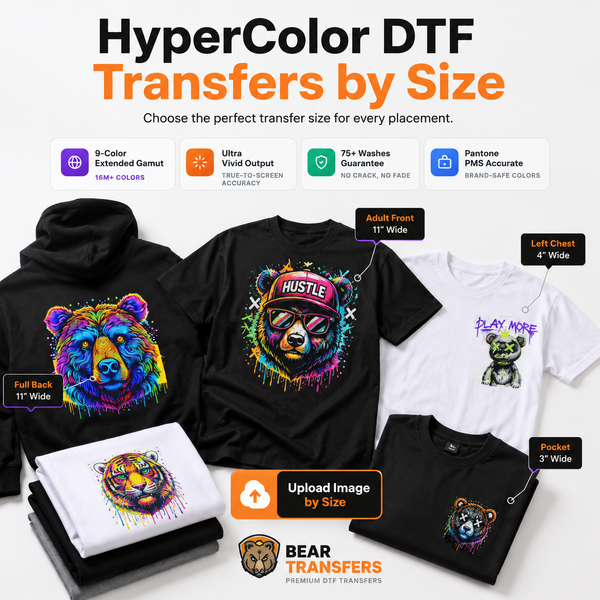
Use consistent dimensions so volunteers do not have to make placement decisions for every shirt. The following measurements are useful starting points, not universal rules:
| Product or placement | Starting transfer size | Production note |
|---|---|---|
| Youth full front | 7–9 inches wide | Scale for the smallest garment first |
| Adult full front | 10–12 inches wide | Check artwork proportions and shirt width |
| Left chest | 3–4 inches wide | Keep fine text readable |
| Upper back | 10–12 inches wide | Allow space below the collar |
| Sleeve | 2–3.5 inches wide | Avoid pressing directly over seams |
Print paper templates at actual size and place them on sample garments. This quick check catches oversized youth graphics, unreadable sponsor text, and designs that sit too close to a hood or pocket. For smaller brand placements, consult the left-chest logo sizing chart.
Secure artwork approval
Do not print a school name, logo, mascot, or athletics mark until the authorized school representative approves its use. Ask the administration or activities office who controls brand standards and whether sponsor logos require separate approval.
Keep written approval with the final artwork file. Confirm colors, spelling, dates, team names, graduation years, and sponsor order before accepting customer purchases. One designated approver is better than collecting conflicting feedback from an entire committee.
Build Gang Sheets Without Wasting Space
A gang sheet places multiple transfers on one printed film sheet. PTAs can combine front logos, sleeve marks, staff designs, team graphics, and size variations to use the available width and length efficiently.
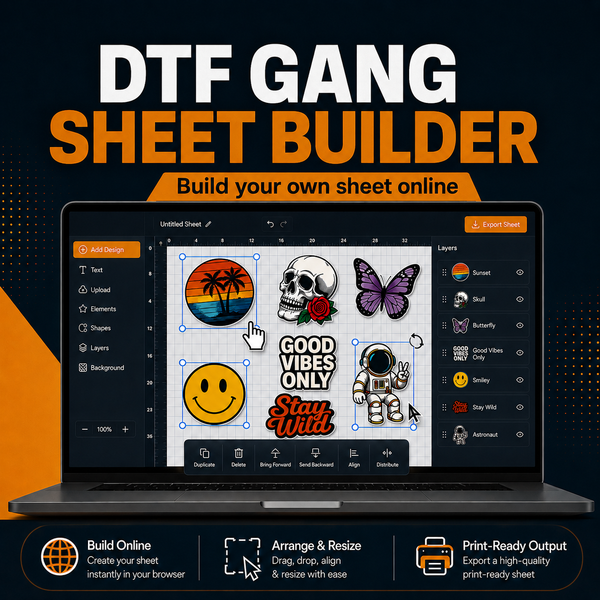
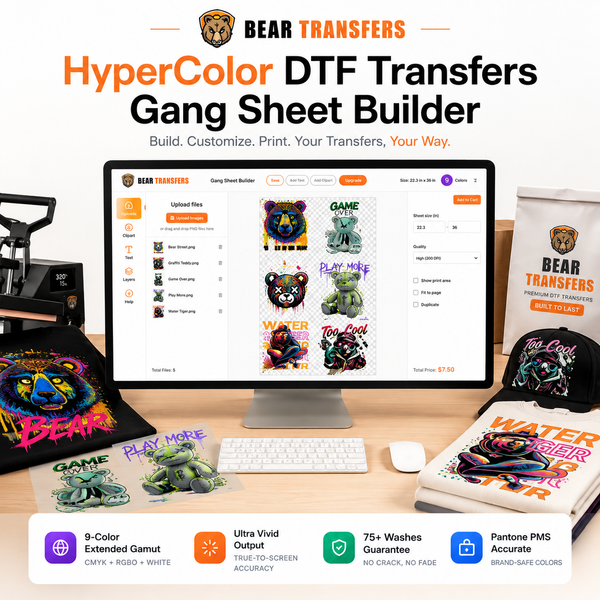
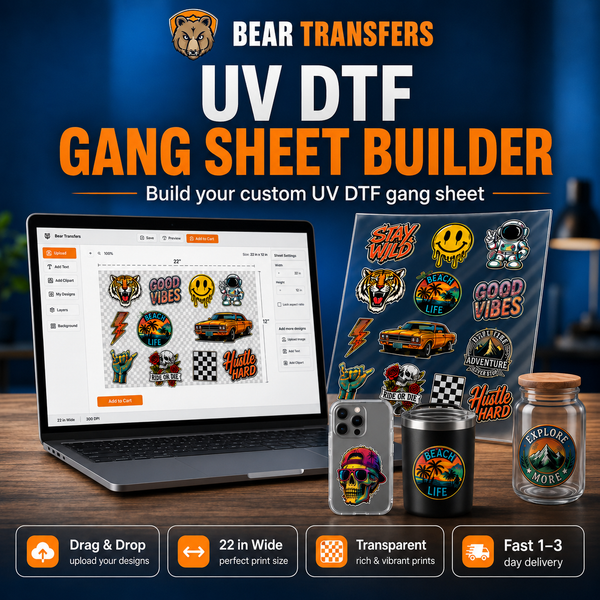
If you have individual transparent artwork files, use the DTF gang sheet builder online to arrange and duplicate each design. Keep a small gap around every transfer so volunteers can cut them apart without touching another image.
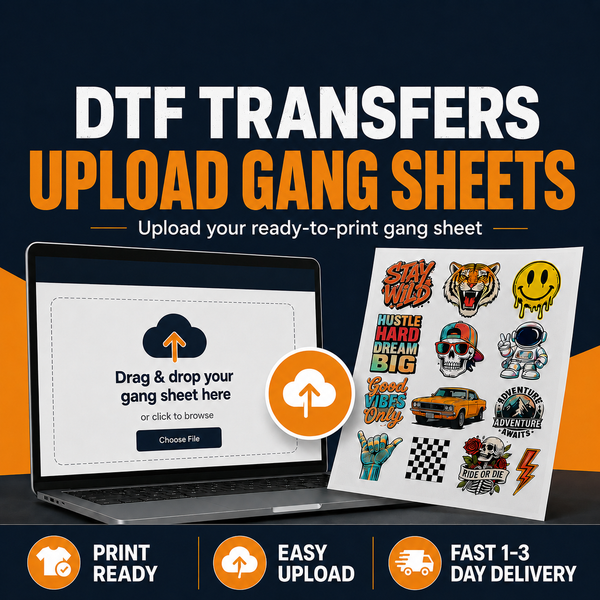
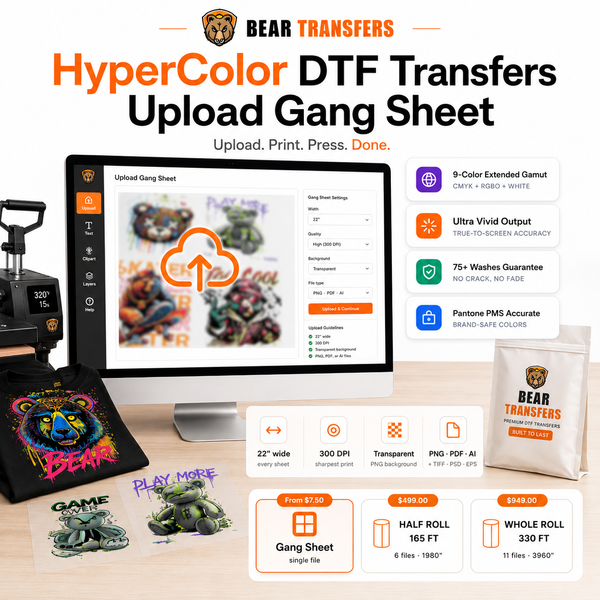
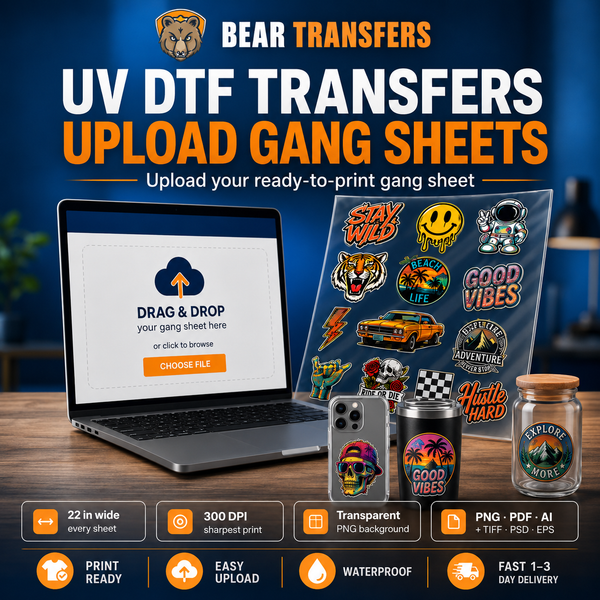
If your designer has already prepared a correctly sized print layout, you can upload your own ready-made gang sheet. Confirm the file’s physical dimensions, resolution, background transparency, and orientation before submitting it. Do not assume a preview image or social media graphic is production-ready.
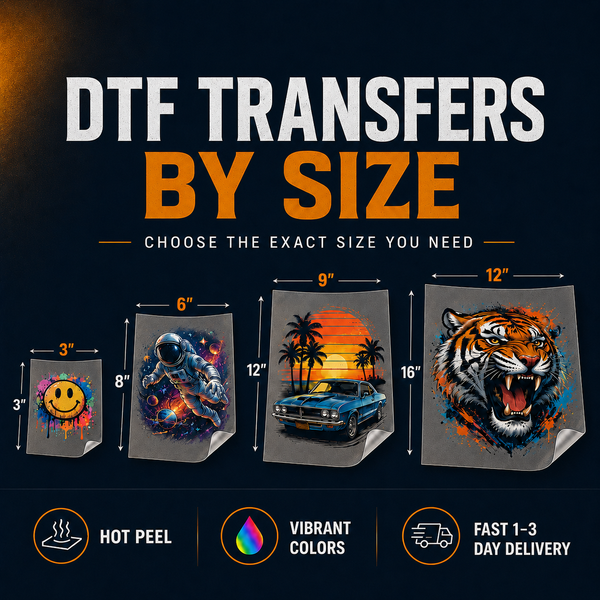
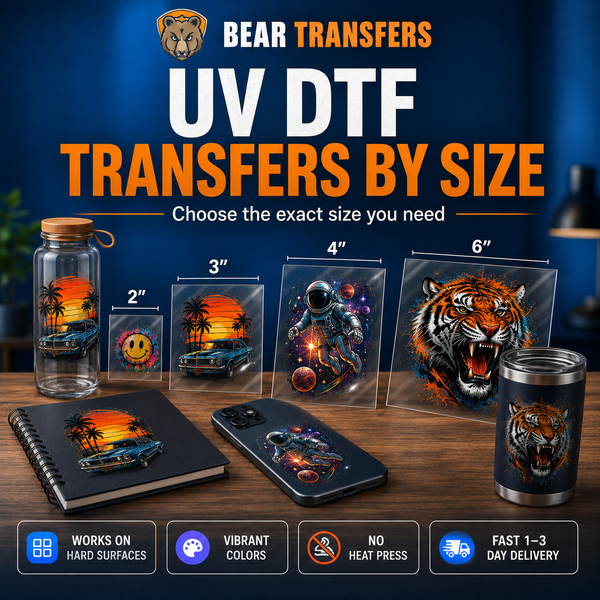
For a handful of graphics in known dimensions, it may be easier to order DTF transfers by size. This route is helpful when a volunteer does not want to arrange a gang sheet or when the order contains only one or two designs.
Count transfers from paid orders
Use preorders whenever possible. Collect payment first, close the store on a published date, and count each design and size before ordering transfers and blanks. Add a few replacement transfers for pressing mistakes, but avoid creating a large speculative inventory.
A basic production worksheet should track:
- Customer name and contact information
- Garment style, color, and size
- Design name, transfer dimensions, and placement
- Quantity paid, quantity produced, and pickup status
- Special instructions approved before the deadline
Group identical transfers together on the gang sheet and label artwork versions clearly. The guide to how many designs fit on a 10-foot gang sheet can help you estimate capacity before placing a larger order.
Press, Check, and Fulfill Orders Consistently
A reliable heat press is essential. Household irons do not provide the consistent temperature and pressure needed for repeatable spiritwear production. Follow the current pressing instructions supplied with your transfers and adjust only after testing the exact blank.
Create a repeatable pressing station
- Match the blank, transfer, and customer order before pressing.
- Inspect the garment and remove lint, moisture, or packaging creases as needed.
- Position the transfer using a ruler, alignment guide, or approved template.
- Press with the recommended time, temperature, and pressure.
- Peel according to the current hot-peel instructions.
- Complete any recommended finishing press using the proper protective sheet.
- Inspect adhesion, alignment, and garment condition before packing.
Assign one trained press operator when possible. If several volunteers are working, post the pressing settings and placement standards at the station. Record any approved setting changes by garment type so the next shift does not have to repeat the test process.
Quality control should happen before the apparel enters a pickup bag. Check that edges are fully adhered, small details transferred cleanly, the graphic is straight, and the correct design is on the correct garment. Never stack freshly pressed graphics face-to-face while they are still warm.
Set realistic customer expectations
Publish one order deadline, one estimated completion window, and specific pickup times. Build in time for blank apparel availability, transfer production, UPS transit, volunteer scheduling, pressing, and corrections. Free shipping is available on qualifying Bear Transfers orders over $99, but committees should still leave schedule room for carrier delays or weather.
Include garment care instructions with each order. Tell customers to follow the care guidance supplied for the decorated apparel, avoid ironing directly over the design, and wait the recommended period before the first wash. Clear instructions protect the finished product and reduce preventable complaints.
After the first sale, document which colors, sizes, garments, and designs moved fastest. Use that information to narrow the next collection, improve margins, and decide whether a small amount of ready-to-sell inventory is justified.
FAQ
Can a PTA produce spiritwear only after orders are placed?
Yes. A preorder model is often the easiest approach because it provides exact garment sizes and transfer quantities before production begins. State the order deadline and expected pickup window clearly.
Can youth and adult designs go on the same gang sheet?
Yes. Gang sheets can contain multiple dimensions and designs. Label or organize the sizes carefully so volunteers do not apply an adult transfer to a youth garment.
How many shirt choices should a booster club offer?
Start with two or three dependable garment styles and a limited set of colors. Expand only when previous sales show enough demand to justify additional inventory and production complexity.
Do we need permission to print the school mascot?
Usually, the school or district controls how its name, mascot, and logos may be used. Obtain written approval from the authorized representative before selling decorated products.
When your artwork and order counts are approved, build a DTF gang sheet online and move your school spiritwear into production.