


Matte vs Glossy DTF Finish: What Sells Better?

Two identical DTF designs can look noticeably different after pressing: one may have a soft matte surface, while the other catches the light with a smooth gloss. The difference is not just the artwork—it comes from the transfer film, finishing sheet, ink coverage, garment, and pressing process.
What Matte and Glossy Mean in DTF Printing
Sheen describes how much light the printed surface reflects. A matte DTF finish diffuses light and looks relatively flat, while a glossy finish creates stronger, more defined reflections. Between those extremes is a satin or semi-gloss appearance, which is common in decorated apparel.
Finish should not be confused with color quality. A matte transfer can still produce deep blacks and bright colors, while a glossy transfer can look dull if the artwork or garment pairing is weak. If color range is the priority, HyperColor 9-color RGB DTF transfers are designed for expanded color possibilities, but the perceived sheen will still depend on the surface and pressing variables.
Finish also does not determine durability by itself. Properly applied hot-peel DTF transfers can deliver long-term wash performance regardless of whether the final surface looks matte, satin, or glossy. Bear Transfers backs its hot-peel transfers with a 100+ wash guarantee, so the better finish is the one that supports the product style rather than the one that simply looks shinier.
What Changes the Sheen of a DTF Transfer?
The coated PET carrier film
The film used during production helps establish the transfer’s initial surface. Because the printed layer rests against the coated film, the film texture can be reproduced on the face of the design. A smooth carrier can produce more reflection, while a microscopically textured surface can soften the sheen.
This means the first pressed appearance is partly built into the transfer. Peel timing matters too. A hot-peel transfer should be peeled according to its instructions; waiting too long, peeling too early, or pulling unevenly can affect edge quality and surface consistency even if it does not intentionally create a different finish.
The post-press cover sheet
The finishing or post-press step is one of the most useful controls available to an apparel decorator. After removing the carrier, the design is pressed again under an approved cover material. That material can leave its own surface character on the transfer.
- Matte finishing sheets or textured paper: Generally reduce sharp reflections and create a more retail-like surface.
- Smooth nonstick sheets: Often leave a satin or slightly glossier appearance.
- Gloss finishing sheets: Can create a more reflective face when they are compatible with the transfer and application process.
Do not assume every parchment, kraft paper, or nonstick sheet produces the same result. Texture varies by brand and product. Press a small sample and reserve that finishing material for jobs where consistency matters.
Ink coverage and artwork construction
Large solid areas reflect light more visibly than distressed artwork, halftones, or fine lettering. A full rectangular print may appear glossier simply because it presents an uninterrupted surface. The same transfer material used for thin line art can appear much more matte because more garment fabric remains visible.
White underbase coverage also affects the visual weight of a print. Dense artwork with broad white-backed areas tends to look more substantial, while open designs feel lighter and integrate better with the garment. When possible, remove unnecessary background areas instead of printing a large box around the design.
Garment texture, pressure, and heat
A transfer does not exist in isolation. Smooth ringspun cotton, textured fleece, performance polyester, and canvas each change how the finished decoration looks. A satin print may appear glossy against brushed fleece but relatively subdued on a smooth synthetic shirt.
Excessive pressure can flatten garment fibers around the design or create an adhesive outline, making the entire pressed area look shiny. Too much heat can also leave a visible press box on heat-sensitive fabric. Pre-press only as needed to remove moisture and wrinkles, then follow the transfer’s specified time, temperature, and pressure. The guide to pre-pressing garments before applying DTF explains how this step improves consistency without turning it into unnecessary dwell time.
Matte vs Glossy DTF: Which Fits the Product?
| Consideration | Matte or Satin | Glossy |
|---|---|---|
| Visual style | Subtle, soft, contemporary | Bold, polished, reflective |
| Good fit | Retail tees, streetwear, workwear, vintage art | Team graphics, event apparel, statement designs |
| Large solid prints | Can reduce visible reflections | Emphasizes smooth printed areas |
| Photography | Easier to light without sharp glare | May create highlights under direct lighting |
| Customer expectation | Often reads as integrated with the garment | Often reads as deliberately decorated |
For general-purpose apparel, matte or satin is usually the safer presentation because it works across more garment styles and does not compete with the artwork. It can also make a broad print feel less visually heavy. This is useful for boutique shirts, company uniforms, and designs intended to resemble a conventional retail graphic tee.
Gloss can sell well when reflection is part of the visual idea. Bright team logos, motorsports graphics, promotional apparel, and high-contrast event designs can benefit from a smooth, polished face. Gloss is less forgiving on oversized solid shapes, however, because glare and surface variation become easier to see.
Garment choice can matter more than a small difference in sheen. Testing the same design on blank apparel priced near cost lets you compare smooth cotton, blends, and fleece without building unnecessary cost into product development. For hoodies, account for fleece texture, seams, and pressure using the guide to DTF hoodie printing on fleece and around seams.
How to Decide Which Finish Will Sell Better
There is no universal sales winner. Customers usually judge the complete product: artwork, color, garment hand, placement, fit, and price. Sheen supports that package, but it rarely rescues a weak design or an unsuitable blank.
- Define the product position. Use matte or satin for understated retail collections and gloss when the reflective effect is part of the design concept.
- Print the actual artwork. A small logo and a 12-inch solid graphic can behave differently, even on the same transfer and finishing sheet.
- Test on the final blank. Evaluate the sample indoors, near a window, and under direct retail-style lighting.
- Photograph both options. Matte surfaces often photograph with less glare, while glossy prints may need softer, angled lighting.
- Ask customers a specific question. Show two finished shirts and ask which looks more appropriate for the intended style, not simply which one they like in isolation.
A DTF and UV DTF sample pack is a practical way to inspect print characteristics before planning a larger product run. Remember that UV DTF is intended for suitable hard surfaces, not wearable fabric, so compare the apparel DTF samples when evaluating shirt finish and flexibility.
Once you select a finish, document the complete process: transfer type, blank SKU, color, press temperature, time, pressure, peel method, finishing sheet, and post-press time. Store the approved finishing sheet with your production supplies and replace it when it becomes creased, contaminated, or visibly worn. Repeatability protects the customer experience more effectively than changing the process job by job.
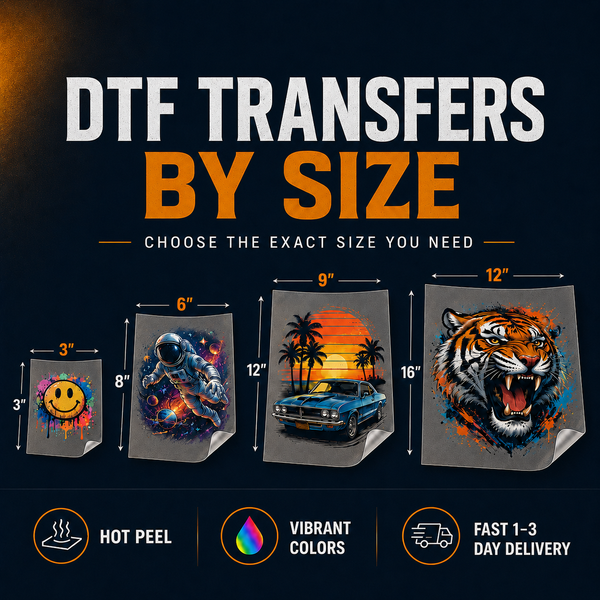
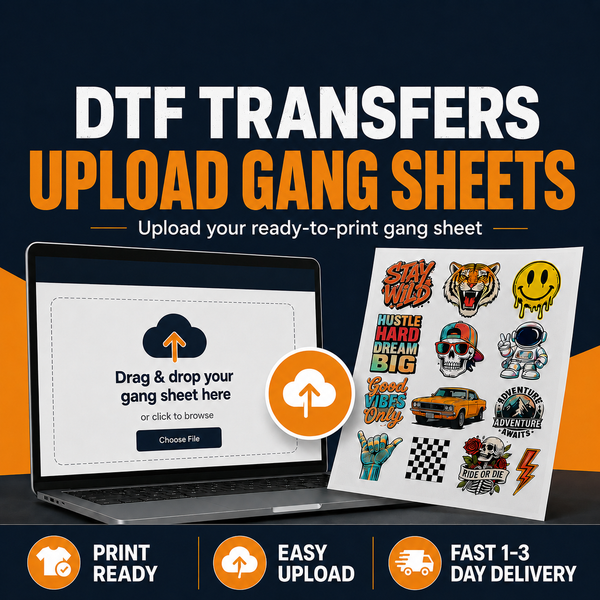
For small test orders, you can order DTF transfers by size without first arranging a full sheet. When several designs are approved, combine logos, neck labels, and artwork with a gang sheet to reduce unused film. Bear Transfers offers gang sheets from $2.58 per foot, same-day production before the posted cutoff, 1–3 day UPS shipping, and free shipping on qualifying orders over $99.
FAQ
Can I make an existing DTF transfer more matte?
Often, the post-press finishing material can reduce sheen, but results depend on the original transfer and the compatible cover sheet. Test one transfer before changing an entire production run, and do not substitute unapproved materials without confirming the required settings.
Does a glossy DTF finish feel thicker?
Not necessarily. Gloss changes how the surface reflects light, while print feel is influenced more by artwork coverage, ink and adhesive construction, garment texture, and the size of solid printed areas.
Why does my shirt have a shiny rectangle around the design?
The rectangle may be flattened or heat-affected fabric rather than the transfer itself. Check temperature, pressure, dwell time, platen condition, and whether the garment requires a protective sheet or pressing pillow.
Should every product in a collection use the same finish?
Consistency is helpful, but the finish can vary when there is a clear design reason. Keep the pressing method consistent within each SKU and record the finishing sheet and settings used for reorders.
When your finish test is approved, build a DTF gang sheet online to arrange production-ready artwork efficiently.