
Local Print Shop vs Online DTF Supplier: Comparison

Your DTF supplier affects every deadline, margin, and finished shirt that leaves your shop. A local print shop may offer convenient pickup and personal service, while an online DTF supplier can provide broader ordering options, predictable production, and pricing built for repeat volume.
The right choice depends on more than who can print the transfer fastest. You need to compare the complete timeline, true cost per design, color and adhesive quality, ordering workflow, and what happens when your volume changes.
Local Print Shop vs Online DTF Supplier at a Glance
Neither option is automatically better for every apparel business. Local shops can be valuable when you need immediate communication or pickup, but capabilities vary widely. Online suppliers are often designed around standardized DTF production, shipping, and self-service ordering.
| Factor | Local Print Shop | Online DTF Supplier |
|---|---|---|
| Turnaround | Potentially fast if equipment and staff are available | Published production and shipping expectations |
| Pickup or delivery | Local pickup may eliminate shipping | Requires shipping, with broader geographic coverage |
| Pricing | May include minimums, setup fees, or local service costs | Often offers gang sheet and size-based ordering |
| Ordering | Email, counter service, or custom quote | Online builders and direct file uploads |
| Print options | Depends on the shop's equipment and supplies | May include specialized color systems and multiple transfer products |
| Consistency | Depends on operator, equipment, and workload | Standardized production can support repeat ordering |
| Support | Face-to-face help may be available | Remote support plus documented ordering requirements |
Do not make the decision based only on distance. A supplier three miles away is not necessarily faster if your job waits several days in a queue, and an online supplier is not necessarily slow when production and UPS transit are clearly defined.
Turnaround: Compare the Entire Production Timeline
When a local shop can be faster
A local shop has a clear advantage when it can print your transfers immediately and let you pick them up. This can save a rush order when a customer adds shirts at the last minute, a transfer is damaged during pressing, or you need one replacement before an event.
That advantage depends on actual capacity. Ask whether DTF is produced in-house, which days the equipment runs, whether the required film and powder are in stock, and when your job will enter production. Some print shops offer DTF alongside other services, so screen printing, embroidery, or finished-garment orders may compete for production time.
How online turnaround works
An online DTF supplier adds transit time but can offer a more structured workflow. Bear Transfers has a same-day production cutoff, most orders ship within 24 hours, and UPS shipping typically takes 1–3 days. Your delivery date still depends on when you submit usable artwork, the selected service, weekends, holidays, and carrier conditions.
Work backward from the customer's due date. Include time for:
- Artwork approval and file preparation
- Transfer production
- Shipping or local pickup
- Receiving inspection
- Pressing and quality control
- Reprints or replacements if something goes wrong
For predictable orders, an online supplier may fit easily into your schedule. For true same-day emergencies, a capable local source can be a useful backup. Many growing shops maintain both instead of forcing one supplier to handle every situation.
Cost: Calculate More Than the Transfer Price
The useful number is not the advertised price of one transfer. It is the total cost of getting press-ready designs into your shop, including setup charges, minimums, shipping, unused film, labor, and the risk of rework.
Compare gang sheets with size-based ordering
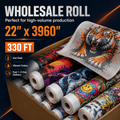
Gang sheets usually provide the best value when you can arrange several designs efficiently. Bear Transfers offers DTF gang sheets from $2.58 per foot, allowing apparel businesses to combine front logos, full-size backs, sleeve prints, neck labels, and customer designs on the same sheet.
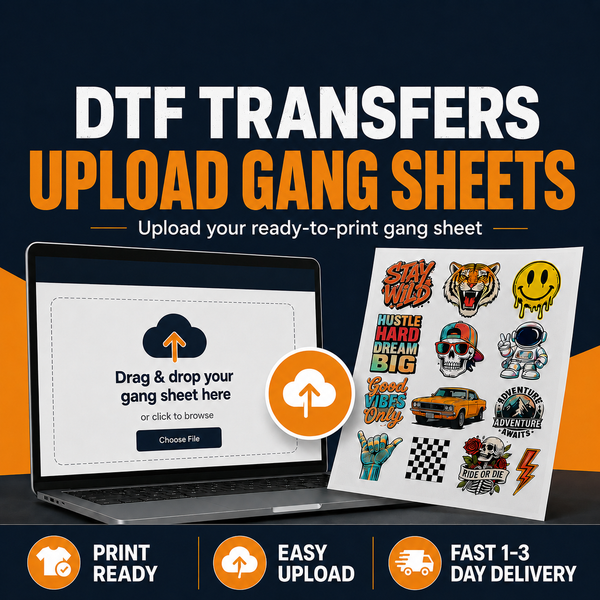
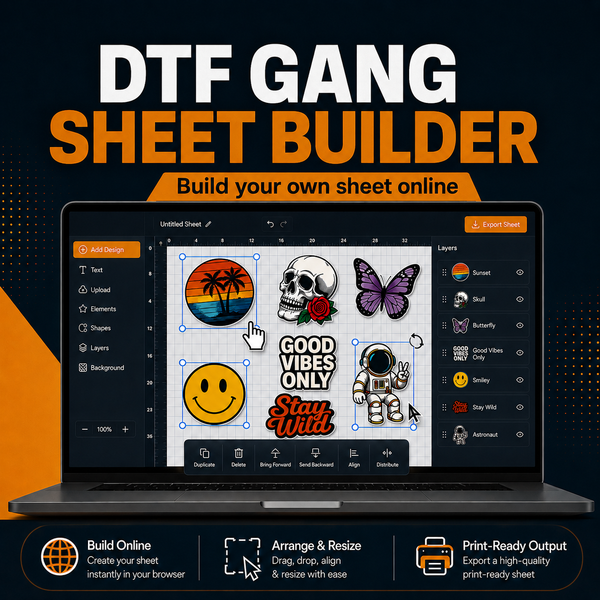
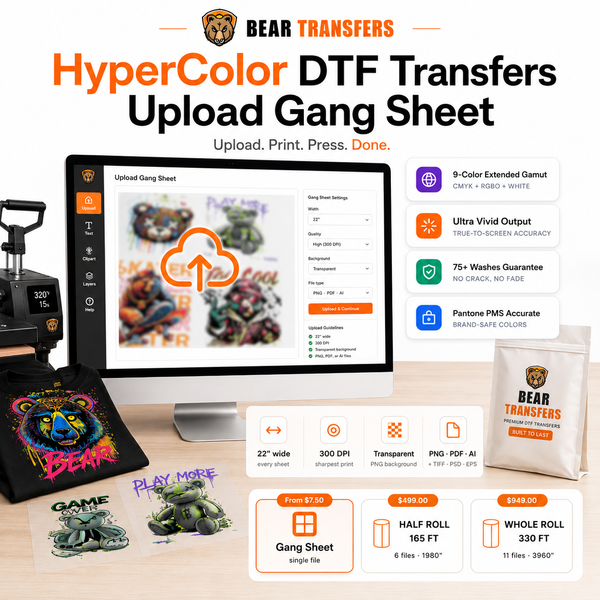
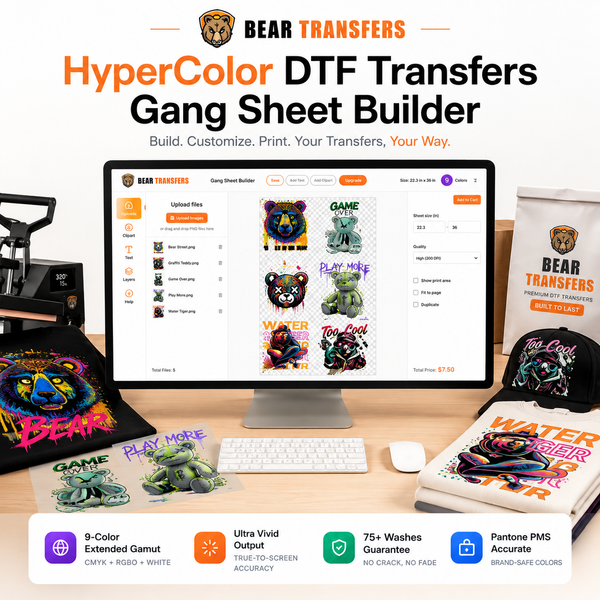
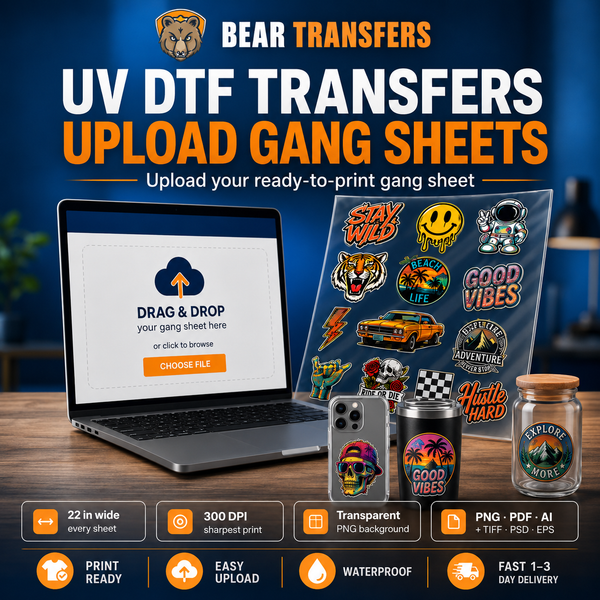
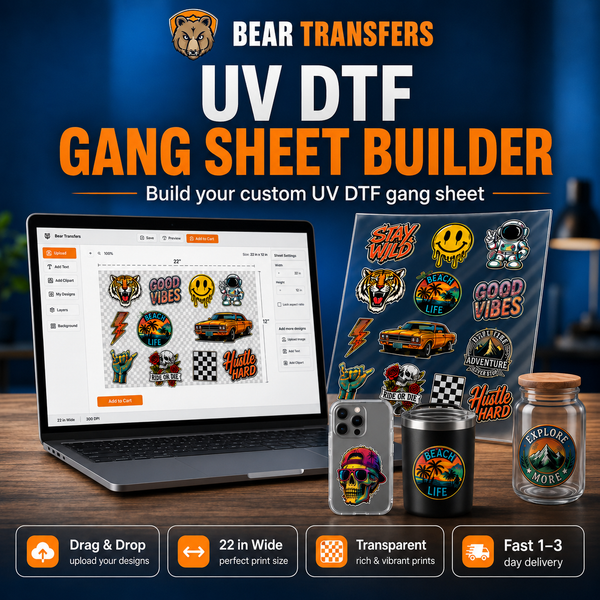
If you want layout control without working in separate design software, you can arrange artwork with the DTF gang sheet builder. Shops that already export production-ready layouts can upload a ready-made gang sheet instead.
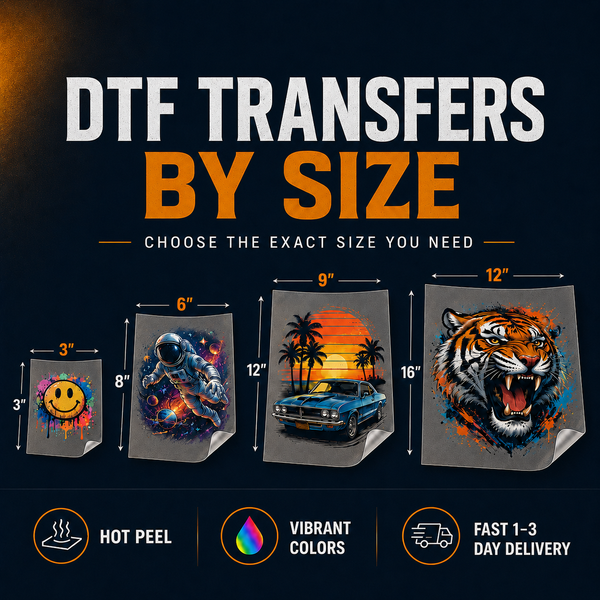
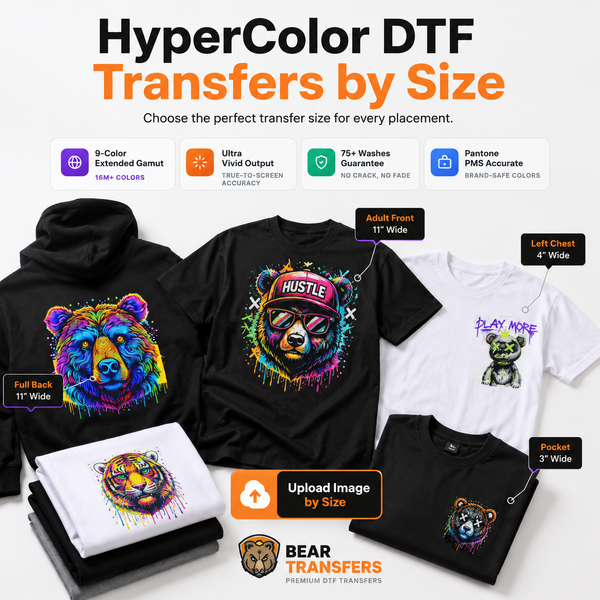
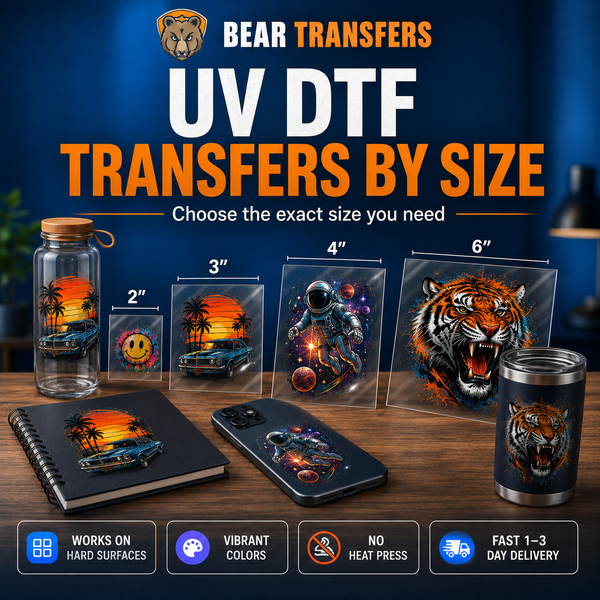
Gang sheets are not always the simplest choice. For a small order with one repeated logo, it may be easier to order DTF transfers by size. Compare both methods based on usable transfers, not just sheet length.
Include hidden operating costs
- Artwork labor: Time spent resizing files or manually nesting designs affects your margin.
- Minimum quantities: Buying more transfers than the order needs ties up cash and creates leftover inventory.
- Pickup time: Local pickup avoids freight but still uses fuel and paid working time.
- Shipping: Combine planned orders when practical and account for free-shipping thresholds. Bear Transfers offers free shipping on orders over $99.
- Failed presses: Poor adhesion, inconsistent powder, or unclear instructions can cost more than a small difference in transfer price.
Garment sourcing belongs in the same calculation. Ordering blank apparel priced near cost with your production supplies can simplify purchasing, but always compare garment availability, shipping, and the exact style required by your customer.
Quality: Test Color, Adhesion, Feel, and Repeatability
A transfer can look impressive on the film and still fail in production. Evaluate quality after pressing, stretching, wearing, and washing the garment. The transfer should release cleanly, retain fine details, provide suitable opacity, and adhere consistently when pressed according to the supplier's instructions.
Ask what the supplier can reproduce
Local shops may let you inspect samples in person and discuss artwork directly with an operator. That is useful for unusual fabrics, delicate details, or color-sensitive brand work. However, in-person service does not guarantee an exact match, and DTF output can vary with the printer, ink set, color profile, film, powder, and maintenance schedule.
An online supplier should provide a consistent ordering standard and clear artwork expectations. For designs that benefit from an expanded color range, HyperColor 9-color RGB DTF transfers add dedicated color capability beyond a standard CMYK workflow. For brand-critical work, review the practical limits of digital printing in this guide to color matching logos in DTF.
Run your own production test
Do not approve a supplier using an unpressed film sample alone. Order representative artwork, including small text, gradients, solid white areas, saturated colors, and fine lines. A DTF and UV DTF sample pack can help you evaluate transfer types before committing a customer order.
Press the sample on the same garments and heat press you use in production. Check temperature with reliable measuring equipment, follow the stated pressure and peel instructions, and record the settings. Bear Transfers provides hot-peel transfers backed by a 100+ wash guarantee when properly applied and cared for.
After pressing, inspect edges, opacity, surface finish, stretch response, and adhesion. Wash testing is especially important before selling a new garment-and-transfer combination. Use a repeatable DTF quality control checklist so every employee evaluates finished work the same way.
How to Choose the Right Supplier for Your Shop
Choose based on your normal order flow rather than one unusually urgent job. A home-based brand producing scheduled weekly drops has different needs from a storefront handling same-day team uniforms.
A local print shop may be the better primary option when:
- You regularly need same-day pickup.
- You want face-to-face artwork help.
- The shop demonstrates consistent in-house DTF production.
- Its pricing remains competitive at your typical quantities.
An online DTF supplier may be the better primary option when:
- You need flexible gang sheet and size-based ordering.
- You want to submit jobs outside local business hours.
- You ship apparel nationally and can plan around a defined production window.
- You need specialized products or expanded color options.
- Your order volume changes from small custom jobs to larger batches.
A hybrid approach can reduce risk. Use an online supplier for planned production and maintain a tested local source for genuine emergencies. Whichever model you choose, place a trial order before a major launch, save approved artwork files, document press settings, and evaluate consistency across repeat orders.
FAQ
Is a local print shop always faster than an online DTF supplier?
No. A local shop can eliminate shipping, but its production queue may be longer. Compare the promised ready time with the online supplier's production window and estimated transit time.
Are online DTF transfers cheaper?
They can be, especially when gang sheets are filled efficiently, but compare setup fees, shipping, minimums, artwork labor, and wasted space. The lowest sheet price does not always create the lowest cost per finished garment.
How should I test a new DTF supplier?
Order several designs that represent your normal work, press them on your usual blanks, and inspect detail, color, opacity, peel behavior, adhesion, stretch, and wash performance before accepting a large customer order.
Should I use one supplier for every DTF order?
Not necessarily. A primary online supplier and a qualified local backup can give you predictable everyday pricing while preserving an emergency option for replacements or last-minute additions.
Start your next production layout with the online DTF gang sheet builder and compare the complete cost and timeline for your shop.