







Bulk DTF Ordering: How Resellers Cut Print Costs

Bulk DTF ordering can improve reseller margins, but buying more transfers does not automatically create a lower cost per print. The real savings come from filling gang sheets efficiently, consolidating orders, controlling artwork variations, and avoiding inventory that may never sell.
For wholesalers and small apparel businesses, the goal is simple: reduce transfer, shipping, labor, and spoilage costs without delaying customer orders or tying up cash in unproven designs.
Calculate the Real Cost per DTF Print
Your transfer price is only one part of the cost. A reseller should calculate the landed and production-ready cost of each print before setting wholesale pricing.
Use this basic formula:
Cost per usable print = transfer order cost + allocated shipping + expected spoilage + preparation labor, divided by the number of usable transfers.
If you also supply the garment, track that separately or add it to calculate the complete decorated-garment cost. Keeping transfer and garment costs visible makes it easier to compare customer-supplied apparel jobs with full-service wholesale orders.
Include these expenses in your calculation:
- Transfer cost: The amount paid for gang sheets or individual transfers.
- Shipping: Divide the shipping charge across the usable prints in the order.
- Artwork preparation: Account for time spent resizing, removing backgrounds, checking resolution, and arranging layouts.
- Spoilage: Allow for occasional application errors, damaged garments, or transfers used for testing.
- Cutting and sorting: Dense gang sheets save material, but every individual print still needs to be separated and matched to the correct order.
- Press labor: Track the time required to position, press, peel, and complete any required finishing step.
Bear Transfers DTF gang sheets start at $2.58 per foot, so efficient layout planning can create a strong base cost. However, the lowest material price will not protect your margin if half the sheet is empty or your team spends excessive time identifying nearly identical transfers.
| Cost lever | Reseller action | Likely operational effect |
|---|---|---|
| Sheet utilization | Fill open areas with approved repeat designs | More sellable prints per foot |
| Order consolidation | Combine compatible jobs into one production batch | Lower shipping allocation per print |
| Size standardization | Offer a controlled menu of print dimensions | Less setup time and fewer ordering errors |
| Artwork control | Approve final files before building sheets | Less waste from revisions and reprints |
| Sorting | Group designs by customer, size, or purchase order | Faster receiving and production |
Use Gang Sheets to Create Volume Savings
Gang sheets let resellers place multiple designs, sizes, and quantities on one continuous sheet. They are especially effective when you manage recurring logos, team orders, event merchandise, school apparel, or several small wholesale accounts.
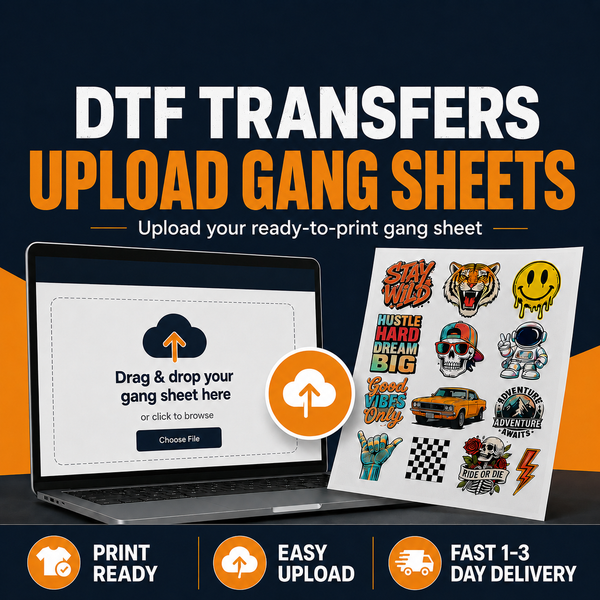
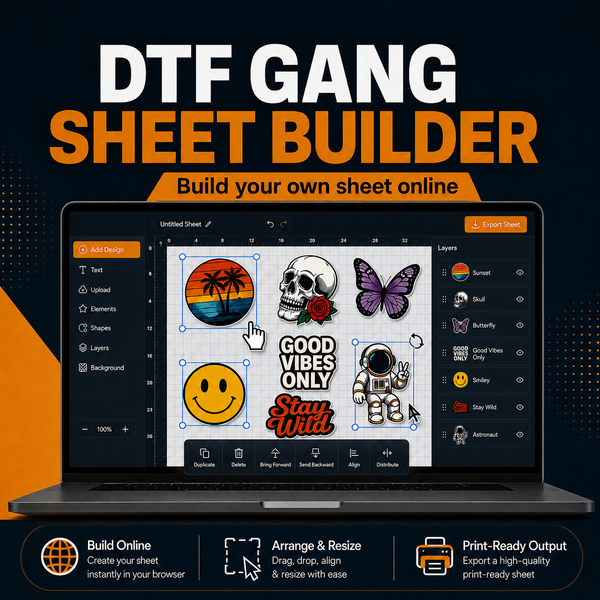
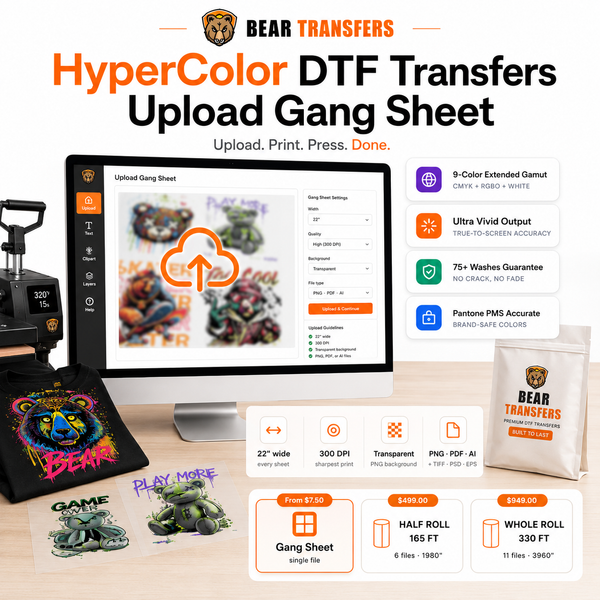
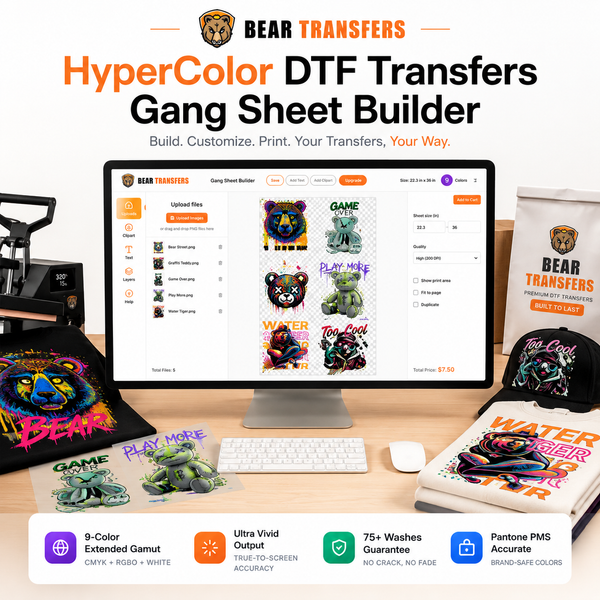
You can build a DTF gang sheet online when you want to arrange artwork directly in the builder. If your production team already uses design software and has a completed layout, you can instead upload your own ready-made gang sheet.
Fill space with proven artwork
Start with confirmed customer quantities. Then use remaining space for designs with reliable repeat demand, such as staff logos, standard left-chest marks, reorderable business logos, or evergreen shop branding.
Avoid filling every gap with speculative graphics just to make the sheet look efficient. A transfer that never sells still has a cost. Open space is less damaging than inventory that consumes cash, sorting time, and storage space without generating revenue.
Standardize common print sizes
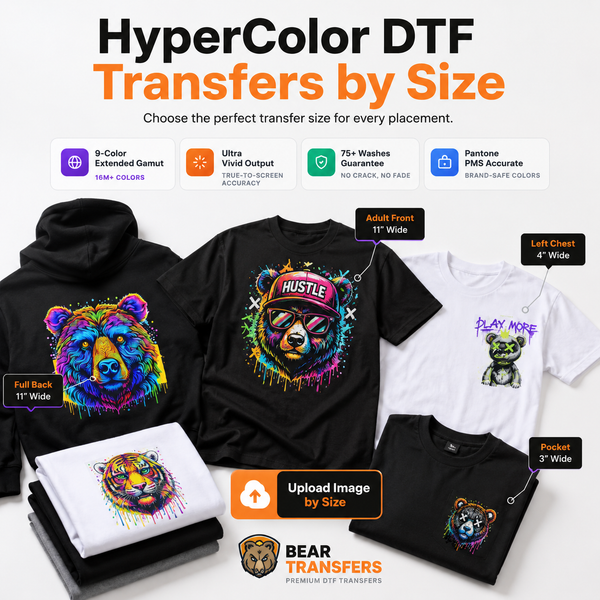
A short list of standard dimensions makes gang sheet planning faster. For example, your reseller menu may include left-chest, youth front, standard adult front, and oversize adult front options. Customers can still request custom dimensions, but those jobs should account for the additional setup and less predictable sheet utilization.
If you decorate mixed age ranges, consult the adult, youth, and toddler print size chart before duplicating artwork. Scaling every graphic to one width can produce poor results on smaller garments and create avoidable reprints.
Control spacing and rotation
Place designs close enough to use material efficiently while leaving practical room for cutting. Rotate artwork when it improves the layout, but preserve the exact dimensions and aspect ratio. Review the guidance on how to fix gang sheet spacing, bleed, and rotation mistakes before submitting a large production file.
Also label similar graphics when necessary. A tiny identifier placed outside the cut area can prevent your team from mixing customer versions, colorways, or sizes.
Build a Repeatable Bulk Ordering Workflow
A consistent ordering schedule reduces emergency shipping, rushed approvals, and incomplete sheets. Instead of placing an order whenever a customer sends a file, establish daily or scheduled production cutoffs for artwork approval.
- Collect orders by deadline. Require the design, dimensions, quantity, garment color, and due date.
- Verify artwork. Check transparency, resolution, spelling, color expectations, and final size before layout.
- Group compatible jobs. Combine approved work based on production date rather than waiting for unrelated future orders.
- Build and inspect the sheet. Check for unwanted backgrounds, clipped artwork, duplicates, and incorrect dimensions.
- Save the final layout. Keep a copy connected to the customer order or purchase order number.
- Plan receiving and sorting. Decide who will cut, label, count, and stage each batch before the package arrives.
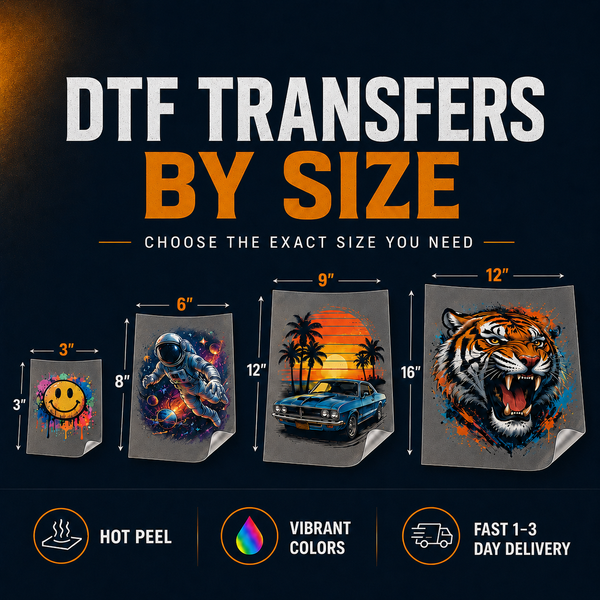
For small or irregular orders, it may be more efficient to order DTF transfers by size instead of forcing a low-quantity job onto a poorly filled gang sheet. Gang sheets are a cost tool, not a requirement for every order.
Plan around shipping thresholds as well. Bear Transfers offers free shipping on orders over $99. Combining approved jobs to reach that level can reduce the shipping amount allocated to each print, but do not hold a time-sensitive wholesale order merely to add more volume.
Orders placed by the posted same-day production cutoff can move quickly, with most orders shipping within 24 hours and UPS delivery typically taking one to three days. Resellers should still leave room for artwork corrections, carrier movement, sorting, pressing, and customer pickup rather than treating the transit estimate as the full turnaround time.
Protect Margin Without Overordering
The best bulk purchasing strategy balances lower unit cost with inventory turnover. Purchase deeper quantities for confirmed programs and controlled amounts for designs that have not yet established demand.
Separate confirmed, repeat, and speculative demand
- Confirmed demand: Order the full approved quantity plus a small production allowance appropriate for the job.
- Repeat demand: Use sales history and reorder frequency to decide whether extras belong on the sheet.
- Speculative demand: Test with limited quantities before dedicating significant gang sheet space.
Wholesale resellers should also set minimum order values or setup charges that reflect administrative work. A customer ordering three shirts may require the same file review, invoicing, communication, and production setup as a larger account. Your pricing must recover that work.
Blank inventory can affect the same calculation. Purchasing blank apparel priced near cost alongside your transfer planning can simplify sourcing and help you evaluate the complete decorated cost. Keep core colors and sizes based on actual turnover rather than stocking every possible option.
Reserve premium print options for orders that benefit from them. For designs that need an expanded color presentation, gradients, or especially vibrant artwork, consider HyperColor 9-color RGB DTF transfers. Quote the appropriate product instead of absorbing a premium production choice into a standard wholesale rate.
Finally, include purchasing benefits in your long-term cost review. The Bear Cash rewards program can add value to repeat ordering, but your base pricing should remain profitable before rewards are considered.
Reliable transfers also reduce hidden costs after production. Bear Transfers provides hot-peel transfers backed by a 100+ wash guarantee when application and care requirements are followed. Consistent pressing procedures, accurate temperature settings, and trained operators remain essential for delivering that durability.
FAQ
Are gang sheets always cheaper than transfers ordered by size?
Not always. A well-filled gang sheet can lower material cost per print, while a mostly empty sheet may be less efficient than ordering a small number of transfers by size. Compare the landed cost and preparation time for each job.
How far ahead should a reseller order DTF transfers?
Work backward from the customer deadline and include production, one-to-three-day UPS shipping, receiving, sorting, pressing, quality control, and pickup or outbound delivery. Add extra time for large jobs or artwork that has not been approved.
Should I order extra transfers for wholesale jobs?
A modest allowance can protect against pressing errors or damaged garments, especially when the customer needs an exact quantity. Base the allowance on job complexity and your own production process rather than applying a large automatic overage.
How do I stop bulk transfer inventory from becoming waste?
Prioritize confirmed orders, monitor repeat sales by design and size, and test new graphics in small quantities. Review stored transfers regularly and avoid using leftover sheet space for artwork with no clear sales plan.
Consolidate your next reseller batch and build a DTF gang sheet online to turn more of every ordered foot into sellable prints.