Selling Custom Shirts at Craft Fairs: DTF Playbook

Craft fairs can turn a strong shirt design into immediate sales, customer feedback, and repeat orders—but only if your inventory and booth are built for fast decisions. DTF transfers let you test more artwork, press smaller batches, and restock winners without committing to a large quantity of every design.
This playbook covers what to make, how to price it, how to set up your booth, and how to use DTF production to keep market inventory lean and responsive.
Build a Focused Product Assortment
A crowded rack is not automatically a strong assortment. Shoppers need to understand your style within a few seconds, so begin with a clear theme such as local pride, outdoor life, pets, seasonal humor, trades, school spirit, or a specific aesthetic.
Choose a small number of proven shirt colors and let your graphics create variety. Black, white, heather gray, navy, and a few theme-specific colors are easier to manage than a different garment color for every design. You can source blank apparel priced near cost to protect your margins while testing new products.
Give every design a job
Your first assortment should contain several types of products rather than ten versions of the same idea:
- Traffic design: A bold graphic that can be seen from the aisle and pulls shoppers toward the booth.
- Easy gift: A broadly appealing design with a clear recipient, such as dog moms, teachers, mechanics, or campers.
- Local design: Artwork tied to the town, region, landmark, or event.
- Premium design: A larger, more detailed print or specialty garment that supports a higher price.
- Add-on item: A tote, youth shirt, sticker, or small accessory that increases the order without requiring another full-price adult shirt.
Keep the initial run small until customers prove what they want. A practical opening quantity depends on expected attendance, booth history, season, and whether you can press replacements quickly.
| Product role | Starting approach | Restock signal |
|---|---|---|
| Core bestseller | Stock the widest size range in two reliable colors | Repress when common sizes reach one or two units |
| New design | Test a few units across likely sizes | Expand after repeated purchases or requests |
| Seasonal design | Use a short run with a firm selling window | Restock only when another relevant event remains |
| Premium shirt | Display one sample and carry limited backup stock | Press or take orders based on confirmed demand |
Track every sale by design, garment color, and size. Notes such as “requested in youth” or “wanted on a sweatshirt” are also valuable because they reveal products you did not bring.
Use DTF Transfers to Lower Inventory Risk
DTF production separates the printed design from the blank garment. Instead of ordering a finished run in every size and color, you can stock transfers and blanks, then press inventory in smaller batches. That flexibility is especially useful when each weekend produces different demand.
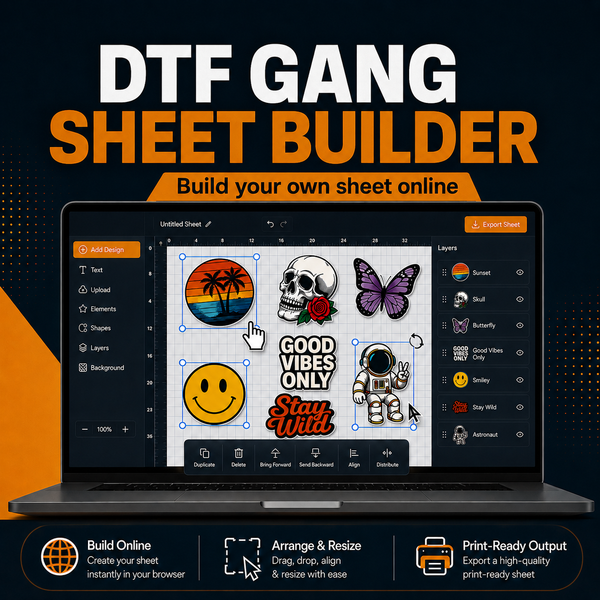
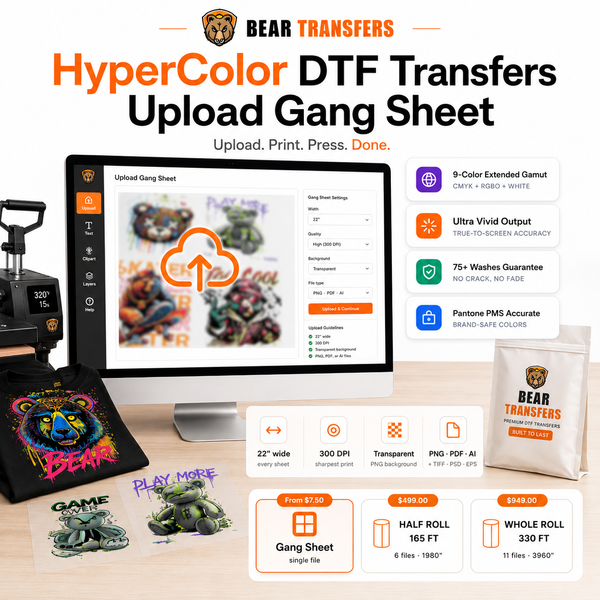
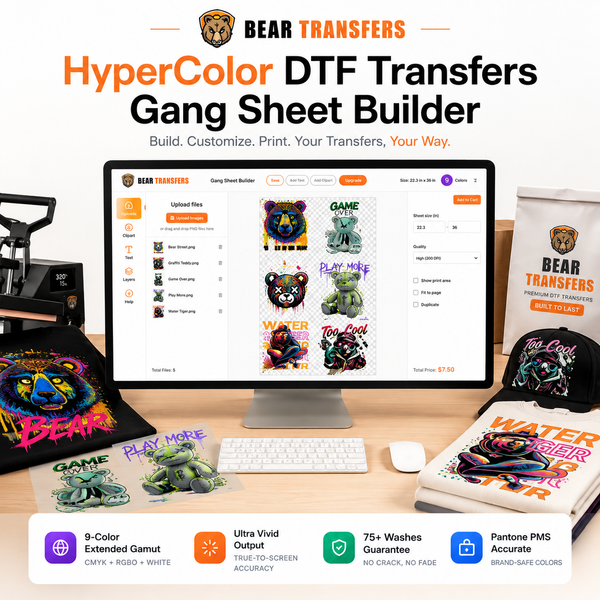
Combine multiple designs, sizes, and small branding elements when you build a DTF gang sheet online. Gang sheets start from $2.58 per foot, making them useful for consolidating market graphics instead of ordering each design as a separate production run.
Plan the sheet around sellable units, not empty space. Include your main front or back prints first, then use remaining areas for pocket graphics, youth versions, sleeve marks, neck labels, or small thank-you transfers. The guide to how many designs fit on a 10-foot gang sheet can help you estimate a practical layout before ordering.
Choose the right ordering method
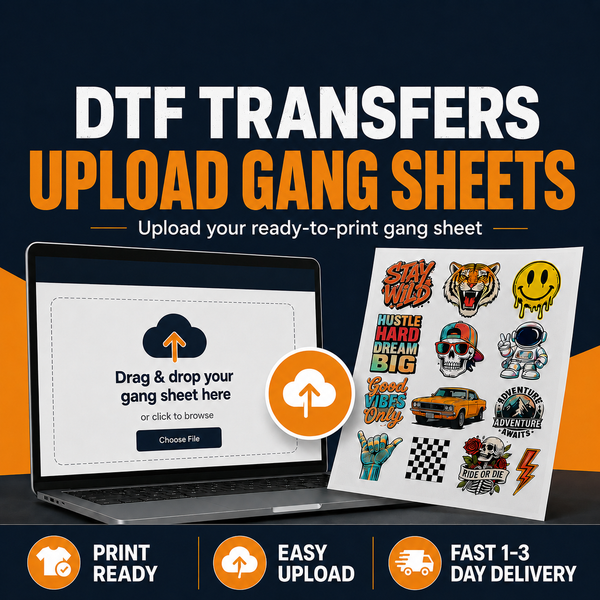
- Mixed assortment: Use a gang sheet when you need several designs or print sizes in one order.
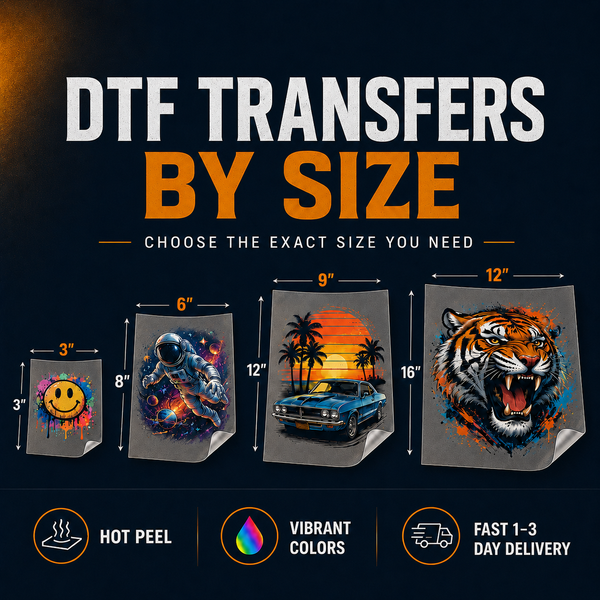
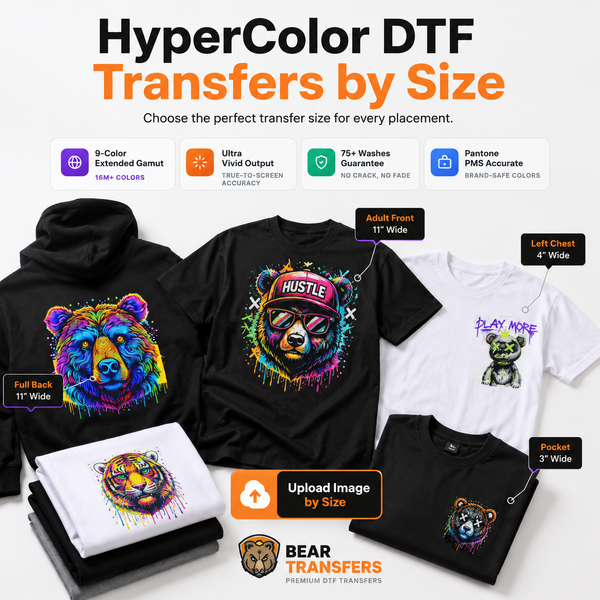
- Simple replenishment: Order DTF transfers by size when you know the exact dimensions and quantity of a bestseller.
- Color-intensive artwork: Consider HyperColor 9-color RGB DTF transfers for artwork built around vivid color, expanded gradients, or eye-catching display pieces.
Bear Transfers hot-peel transfers include a 100+ wash guarantee when applied and cared for as directed. Always follow the current pressing instructions for temperature, time, pressure, peeling, and any recommended finishing press. Test each new garment style before producing the full batch because fabric, coatings, seams, and heat sensitivity can affect application.
Price for the Entire Market Sale
Your transfer and blank are only part of the cost. Include packaging, card processing, booth fees, travel, labor, misprints, garment waste, and sales tax obligations when setting prices. A shirt that appears profitable on materials alone may not cover the full event.
Use a simple worksheet for each item:
- Add the blank garment, transfer, packaging, and direct production labor.
- Allocate a reasonable share of event and selling expenses.
- Add the profit required to make producing and attending worthwhile.
- Round to a price that is easy to display and communicate.
Do not hide prices. Place a clear sign near the front of the booth and label premium garments separately. Shoppers are more likely to browse comfortably when they do not need to ask what everything costs.
Create offers without discounting everything
Protect the value of your main shirts by using targeted bundles. You might pair two shirts at a modest package price, add a sticker to a qualifying purchase, or offer a family bundle across adult and youth sizes. The offer should increase the total order while leaving enough margin to justify the added unit.
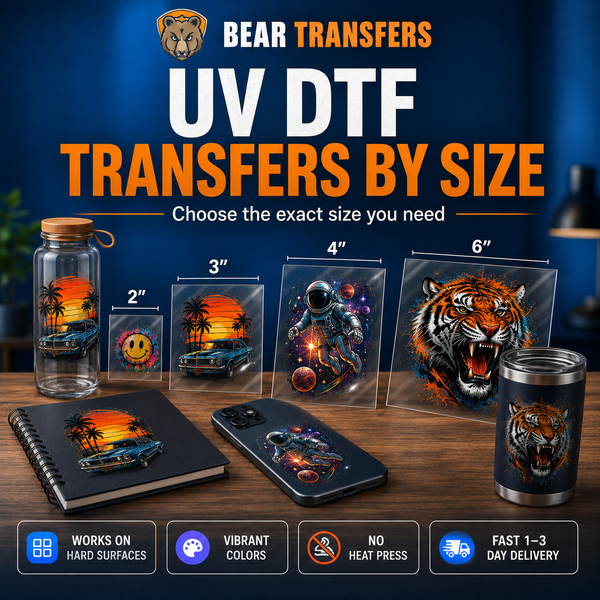
Stickers can extend popular artwork beyond apparel without adding another size matrix. An UV DTF sticker gang sheet builder lets you create durable, dimensional adhesive graphics for suitable hard, smooth surfaces. Keep application expectations clear and avoid promising compatibility with every material or surface.
Design a Booth That Helps People Buy
Your booth should answer four questions quickly: What do you sell? How much does it cost? Which sizes are available? How does someone pay? Solve those questions before adding decorative props.
Merchandise for visibility
- Hang one high-contrast hero shirt where it is visible above nearby tables.
- Face graphics toward the aisle instead of stacking every shirt flat.
- Group products by theme or audience, not by random garment color.
- Keep size markers visible and separate display samples from fresh inventory.
- Use vertical space while keeping merchandise within comfortable reach.
- Store backup stock in clearly labeled bins for fast retrieval.
Limit table clutter. A few strong designs displayed well will outperform a pile that requires shoppers to dig. If a design is available in several colors, show one sample and use a small swatch card or clearly labeled folded options.
Offer controlled customization
On-site personalization can attract attention, but it can also slow the booth and create mistakes. Keep the menu narrow: one or two fonts, a limited set of transfer colors, specific placement options, and a clear turnaround time. Write down the spelling and have the customer approve it before pressing.
If you press at the event, confirm that the organizer allows heat equipment and that the booth has the required electrical service. Keep the press on a stable surface away from children, customer traffic, fabric piles, and flammable display materials. If safe on-site pressing is not practical, take paid orders for later pickup or shipping.
Create a Fast Restock and Follow-Up System
Market sales data is useful only when it changes your next production run. After each event, count remaining inventory, record damaged or missing items, and rank designs by units sold. Separate genuine demand from stockouts: selling the last medium does not tell you how many additional mediums could have sold.
Use a three-part restock list:
- Press now: Proven designs needed for the next scheduled market.
- Order transfers: Winners with enough blank inventory but insufficient graphics.
- Watch list: New or slow designs that need another event before expansion.
Bear Transfers offers same-day production for qualifying orders submitted by the posted cutoff, plus typical 1–3 day UPS shipping and free shipping on orders over $99. Build a small time buffer for pressing, quality checks, packing, carrier movement, and possible event-date changes rather than planning around the final possible delivery day.
Place a care card and contact information in every order. Add a QR code or short web address to your booth signage so shoppers can follow your business, request another size, or order after the event. Capture custom requests in one consistent form instead of relying on social messages and handwritten scraps.
Before leaving for the next market, pack a booth checklist with inventory, signage, payment equipment, chargers, bags, receipt supplies, measuring tools, lint rollers, and an updated stock sheet. A repeatable packing process prevents a strong sales day from being limited by a missing cable or price sign.
FAQ
How many custom shirt designs should I bring to a craft fair?
Start with a focused collection that shoppers can understand quickly. A handful of coordinated designs in proven garment colors is easier to display, track, and restock than a large assortment with only one shirt per option.
Should I press shirts before the market or press them on demand?
Pre-press core sizes and likely bestsellers so customers can buy immediately. Keep extra blanks and transfers for later restocking, and only press on-site when the event permits it and you can operate the equipment safely without slowing checkout.
What shirt sizes should I stock?
Use your own sales history whenever possible. For a first event, carry a practical spread of adult sizes, then record sales and requests by design and garment cut; do not assume the same size mix will work for youth, unisex, fitted, and outerwear products.
How can I avoid being stuck with seasonal inventory?
Press short batches, keep unpressed transfers for rapid replenishment, and set a final restock date based on your remaining event calendar. Neutral blanks can be reused with another design after the season, while finished seasonal shirts are harder to repurpose.
Prepare your next market assortment and build a DTF gang sheet online to combine bestsellers, test designs, and small add-on prints in one layout.